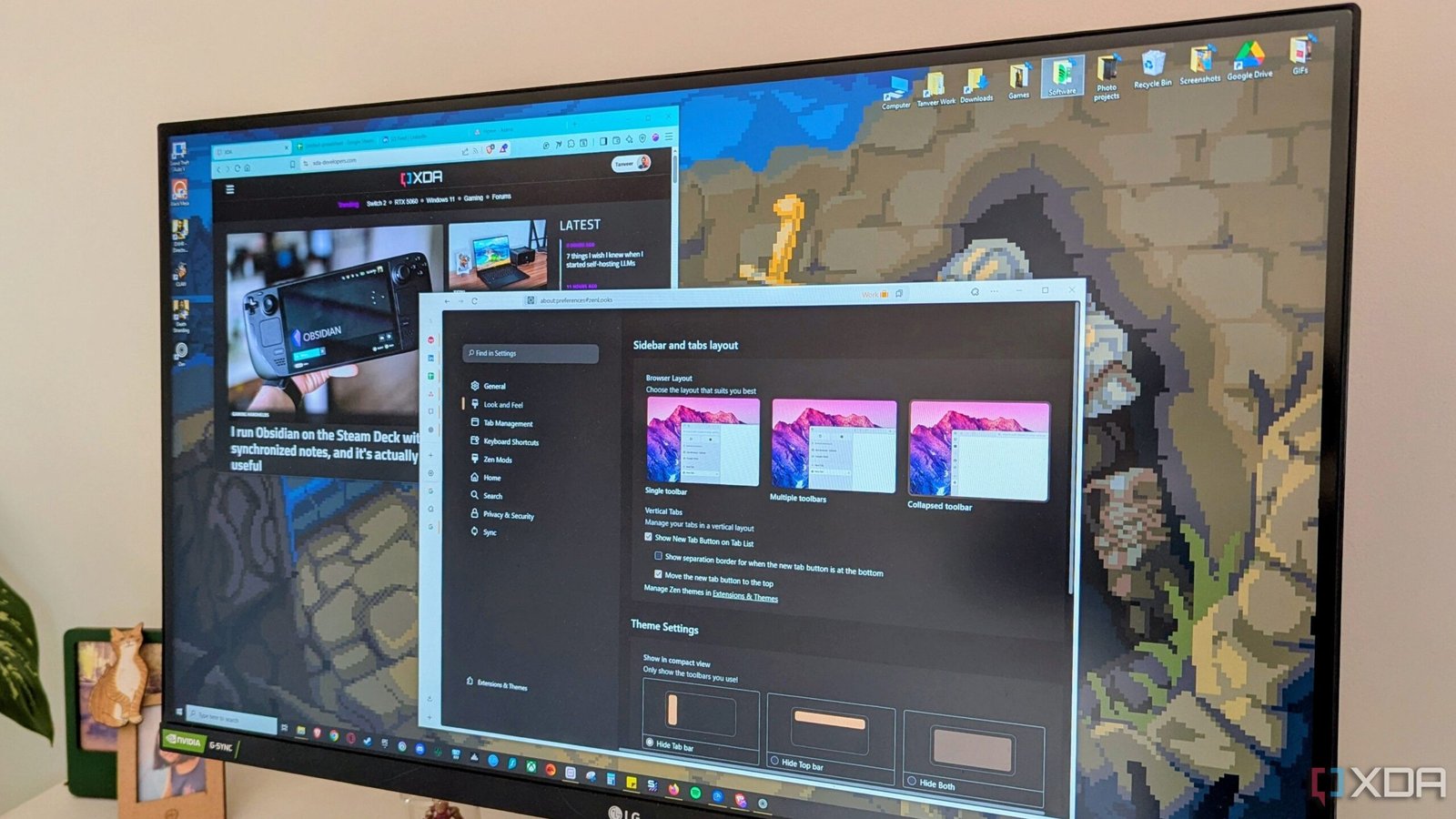
I switched from Chrome to Brave around 3–4 years ago due to its popularity as one of the fastest privacy-focused browsers. Plus, I was interested in crypto back then, and getting paid in BAT to watch some ads sounded like a nice incentive for switching to a browser that resembled Chrome a lot (both are Chromium-based). For the last year, however, I’ve been feeling that Brave isn’t as fast as it used to be. The BAT novelty is over for me, and the browser just feels bloated. The built-in VPN, crypto wallet integrations, and “Leo AI” never interested me anyway.
So, I finally decided to switch to something else, but not just another Chromium browser (due to the rising privacy and monopoly concerns). So, my best options were Firefox and Zen Browser. I had heard great things about both of them, but I wanted to try something new, so I went ahead with Zen Browser, and I’m happy to report that I’m sticking with it.

Related
Zen Browser is actually focused on privacy, unlike Brave
It was time to wake up
Brave makes tall claims about putting the customer first and taking privacy more seriously than others, but at the end of the day, it’s just furthering the Chromium monopoly on the internet. Zen Browser is built on the Gecko engine, the one that powers Firefox, another browser that supports an open web, free from the domination of Chromium. The likes of Zen Browser and Firefox require websites to support multiple rendering engines, not just the one owned by Google.
Brave has also come under the scanner for adding its own referral link to the URLs of certain websites and not implementing the Tor network properly. Even converting the BAT that you earn into real money needs you to do a KYC check on a third-party exchange, which flies in the face of Brave’s privacy claims.
For a long time, I didn’t care too much about how my data was handled by the likes of Chrome or Brave. Considering I’m pretty deep into the Google ecosystem on my phone anyway (Pixel 7), I kept delaying a switch from Chrome to something else on my PC. That said, after discovering excellent non-Chromium alternatives that can be adopted without much disruption to my digital life, it was hard to stay on Brave any longer.
Now that I’ve become comfortable with Zen Browser, I can gradually start moving away from Chrome on my phone. With Firefox Sync, I can continue my desktop browsing in Zen Browser on my Firefox mobile app.

Related
Brave Browser is the most overrated browser out there, and I don’t recommend using it
When it comes to browsers, Brave is touted as one of the best when it comes to privacy, even though it shouldn’t be.
It feels fresh and snappy without major downsides
I’m loving the organization and customization features
The first thing that jumped out at me when I switched to Zen Browser was the lightweight vibe. It truly feels like a “calm” browser without the bloat that I was used to in Brave. It also feels faster than Brave at the moment, and I love the workspaces feature where I can segregate my browsing between work, personal, finance, or other custom categories.
Within workspaces, I can further group tabs into containers to better keep track of all my browsing activity. Unlike tab groups that you see in almost every other browser, workspaces and containers allow you to make your browser vastly more personalized. Then there is the ability to use “essential” and “pinned” tabs. While essential tabs are always there even when switching workspaces, pinned tabs are specific to a single workspace. I’m still getting used to them, but they’re really nifty features.
Now, there are some downsides to Zen Browser, namely the lack of DRM-protected content and a dedicated mobile app. However, neither of these bother me as I don’t like to watch much content on my PC (besides YouTube), and I keep my mobile browsing separate from that on my PC anyway. Once I set up Firefox Sync on my phone, I’ll get seamless browsing across my PC and phone, so that’s not an issue either.

Related
Looking for a better browser made me rethink how I work
I just wanted to ditch Chrome—and ended up reevaluating everything.
Firefox add-ons and Zen Mods mean I don’t miss Brave
I just needed a push to leave Brave behind
Many users are deep into the Chrome or Brave ecosystem, thanks to tons of extensions, that they find it hard to switch to anything else. I’m not a power user when it comes to browsing, so I only ever used a handful of extensions on Brave — one for switching to the previous active tab, another for Keepa’s price tracking feature, one for Grammarly, and a few more.
Thankfully, Firefox, and thereby, Zen Browser, has access to a vast repository of great browser extensions and plugins that can fill any of the gaps I found after making the switch. Plus, “Zen Mods” allow me to experiment with various community-created features like custom themes and icons, URL bar customizations, download indicator customization, and many more. You can basically tweak every aspect of the browser with these mods.
Over a week after switching to Zen Browser, I’ve discovered that my dependency on Brave wasn’t really a thing — I just needed a push to try a better, cleaner, and more privacy-focused browser.

Be brave enough to switch from Brave
Brave is often touted as the best browser available, but it fundamentally goes against many of its own principles. Being a Chromium fork, it’s just another Chrome alternative, and it’s not even the fastest one out there. Zen Browser is based on the Gecko rendering engine, takes privacy seriously, and offers tons of productivity and customization features for anyone switching from a Chromium browser. I wish I had switched earlier, but now that I have, I don’t see myself going back.