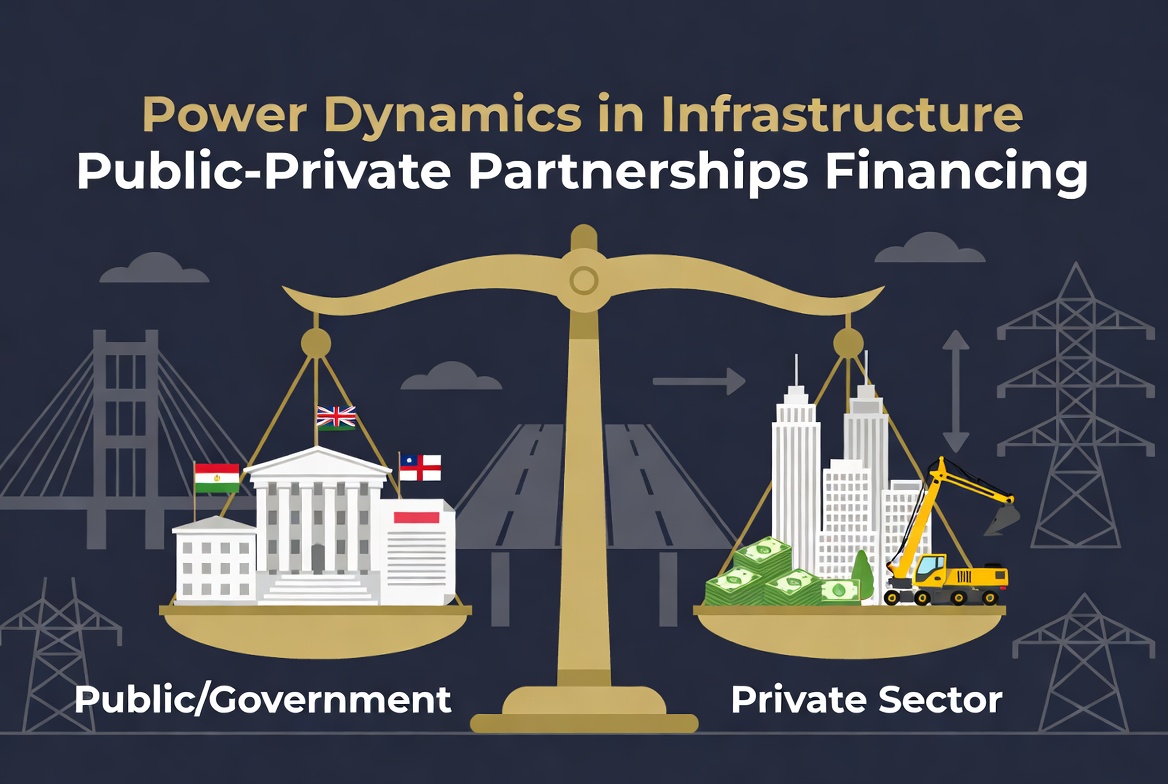
I’ve always been fascinated by big infrastructure projects—the bridges, highways, power plants, and water systems that shape economies and daily lives. But behind the ribbon-cuttings and grand announcements lies a complex web of negotiations, contracts, and competing interests. Public-Private Partnerships (PPPs) are one of the most common ways governments team up with private companies to finance and build these projects. On paper, it’s a win-win: the public sector brings land, regulatory power, and public needs, while private firms offer capital, efficiency, and expertise. In reality, power dynamics often tilt the scales, influencing who bears the risks, who reaps the rewards, and whether projects truly serve the public good.
This article digs into those power dynamics in PPP financing for infrastructure. We’ll look at what PPPs are, how risks and rewards get allocated, the imbalances that arise between governments, private investors, and citizens, real-world examples, and why understanding these forces matters more than ever.
Understanding Public-Private Partnerships in Infrastructure
At its core, a PPP is a long-term contract where a private entity finances, builds, operates, and sometimes maintains an infrastructure asset, while the government retains ultimate ownership or oversight. Financing typically involves private equity, bank loans, bonds, or a mix, often backed by expected revenues like tolls, user fees, or government payments (availability payments).
Unlike traditional public procurement—where the government pays upfront for construction—PPPs shift much of the initial capital burden to the private sector. This can help governments stretch limited budgets, especially in developing countries facing huge infrastructure gaps. The private partner expects a return on investment through profits over decades, often 20-30 years or more.
Sectors like transportation (roads, airports, ports), energy (power plants, renewables), water and sanitation, and healthcare facilities commonly use this model. Proponents argue PPPs bring innovation, better project management, and on-time, on-budget delivery. Critics point to higher overall costs due to private financing premiums, profit motives, and potential for hidden public liabilities.
The Heart of It: Risk Allocation and Power
Risk allocation is where power dynamics become most visible. In theory, risks should go to the party best able to manage them. Construction risk (delays, cost overruns) to the private builder. Demand risk (lower-than-expected usage) shared or borne by the private side. Political or regulatory risk often stays with government. Force majeure events (natural disasters, pandemics) get split.
But practice frequently diverges from theory because of unequal bargaining power. Governments in developing nations may lack technical expertise, negotiating experience, or strong institutions. Private consortia—often backed by international banks, construction giants, and legal teams—come prepared with sophisticated models and leverage. This can lead to contracts favoring the stronger party, with generous guarantees, minimum revenue assurances, or favorable tariff adjustments.
Resource dependency plays a huge role. Cash-strapped governments need private capital urgently. Private investors, meanwhile, seek stable, high-return opportunities with government-backed protections. Citizens and users often have the least voice, bearing higher fees or service disruptions if things go wrong.
In many contexts, studies have shown how power relations distort risk allocation toward stronger parties, influenced by institutional environments. Similar patterns appear globally. Governments might offer too many concessions to attract investment, only to face renegotiations later when projects underperform or politics shift.
Power Imbalances: Government vs. Private Sector
Governments hold sovereign power—they control permits, eminent domain, and regulation. Yet in PPP negotiations, they often act from weakness. Political pressure to deliver visible infrastructure quickly can lead to rushed deals. Corruption risks rise when large contracts are at stake; bribes or political donations sometimes influence awards.
Private partners wield financial and technical power. They can walk away from unattractive deals, pitting countries against each other for investment. Multinational firms bring experience from dozens of projects, while a local government team might handle its first major PPP. This asymmetry shows in contract clauses: extensive government guarantees on demand risk, currency fluctuations, or political instability, effectively transferring downside to taxpayers while private profits remain protected.
Financing adds another layer. Lenders require robust security, leading to complex structures with offshore accounts or escrow mechanisms. Debt is often non-recourse or limited-recourse, meaning lenders have claims on project assets but not the parent company. This protects investors but can leave governments with stranded assets if projects fail.
In Latin America and other regions, waves of PPPs saw frequent renegotiations, with governments often conceding more favorable terms to keep projects afloat. Taxpayers bore bailout costs while private operators secured returns.
Citizens and Users: The Often Overlooked Party
Power dynamics rarely favor end-users. Tariffs or tolls might rise to ensure private returns, pricing out lower-income groups. Service quality can suffer if operators cut corners on maintenance to boost profits. Public consultation is sometimes tokenistic, with communities learning about projects after key decisions are made.
In water or power PPPs, this can spark protests or political backlash. Environmental and social risks—displacement, ecological damage—frequently fall on local populations with limited recourse. Strong civil society, transparent procurement, and independent oversight help balance this, but many jurisdictions lack them.
Case Studies Highlighting Dynamics
Consider toll roads in various countries. Private operators often secure “non-compete” clauses preventing government from building free alternatives, locking in monopoly power. If traffic falls short, governments may pay subsidies, shifting demand risk publicly.
Energy projects in Africa and elsewhere show both promise and pitfalls. Private investment brings much-needed capacity, but uneven power dynamics can lead to expensive power purchase agreements that burden utilities and consumers for decades. Strong private-sector governance and ethical practices are essential to avoid exploitation of weak regulatory environments.
Successful examples exist where balanced power leads to better outcomes. Countries with strong institutions, competitive bidding, and clear regulatory frameworks tend to negotiate fairer deals. Renegotiation clauses that anticipate changes (rather than rigid contracts) reduce conflicts.
Criticisms and Broader Implications
Critics argue PPPs can conceal public debt—liabilities appear off-balance-sheet initially but haunt future budgets. Higher private financing costs (due to risk premiums) sometimes exceed traditional procurement savings. Profit motives may clash with public service goals, leading to underinvestment in maintenance or resistance to equitable access.
There’s also the issue of flexibility. Long-term contracts bind governments, making adaptation to new technologies, climate needs, or economic shifts expensive. Renegotiations are common, often favoring the informed private party with better data and legal resources.
On the positive side, well-structured PPPs can deliver efficiency gains, innovation (like new construction techniques or digital management), and faster project delivery. They force discipline through performance metrics and penalties.
Navigating and Improving Power Dynamics
Transparency is key: competitive bidding, public disclosure of contracts, and independent audits. Capacity building for public officials—training in negotiation, financial modeling, and contract management—levels the playing field. Involving civil society early builds legitimacy and accountability.
International standards emphasize balanced risk allocation, value-for-money analysis, and fiscal sustainability assessments. Using standardized contracts and dispute resolution mechanisms (arbitration, mediation) helps.
Emerging trends include more focus on sustainability, climate resilience, and social outcomes in PPPs. Blended finance (mixing public grants with private capital) and outcome-based payments can align incentives better.
For developing countries, regional cooperation or pooled procurement might increase bargaining power. Technology—data analytics for better demand forecasting—can reduce information asymmetries.
Looking to the Future
As infrastructure needs grow amid climate change, urbanization, and digital transformation, PPPs will remain relevant. But success hinges on addressing power imbalances head-on. Governments must approach partnerships from strength—through better preparation, clear policies, and political will for transparency. Private actors benefit long-term from fair deals that earn public trust and reduce conflict.
Power dynamics aren’t inherently bad; they reflect real differences in capabilities and incentives. The challenge is channeling them toward shared value rather than zero-sum outcomes. Projects that deliver reliable services, reasonable returns, and broad benefits demonstrate what’s possible when balance is achieved.
In the end, infrastructure PPPs are about more than financing—they’re about governance, priorities, and who holds influence over public assets. Understanding these dynamics helps stakeholders push for arrangements that truly ease infrastructure bottlenecks without creating new burdens for future generations. Whether you’re a policymaker, investor, or concerned citizen, paying attention to the power flows behind the contracts can make all the difference.

Victor Ashford is a seasoned blogger, content strategist, and digital publishing expert with over 12 years of blogging experience. Throughout his career, he has written extensively on topics including business, technology, finance, lifestyle, education, and digital marketing, helping readers navigate complex subjects with confidence.