I remember sitting with a friend last year as she shared her frustration after being asked to work unpaid overtime for the third week in a row. Like many employees, she felt uncertain about her rights and worried about potential consequences if she spoke up. Her situation is common. In today’s evolving workplace, understanding your legal protections is more important than ever.
This comprehensive guide provides workers with a clear overview of key employee rights under U.S. labor laws in 2026. While it is not a substitute for personalized legal advice, it offers practical information to help you navigate common workplace situations with greater confidence and clarity.
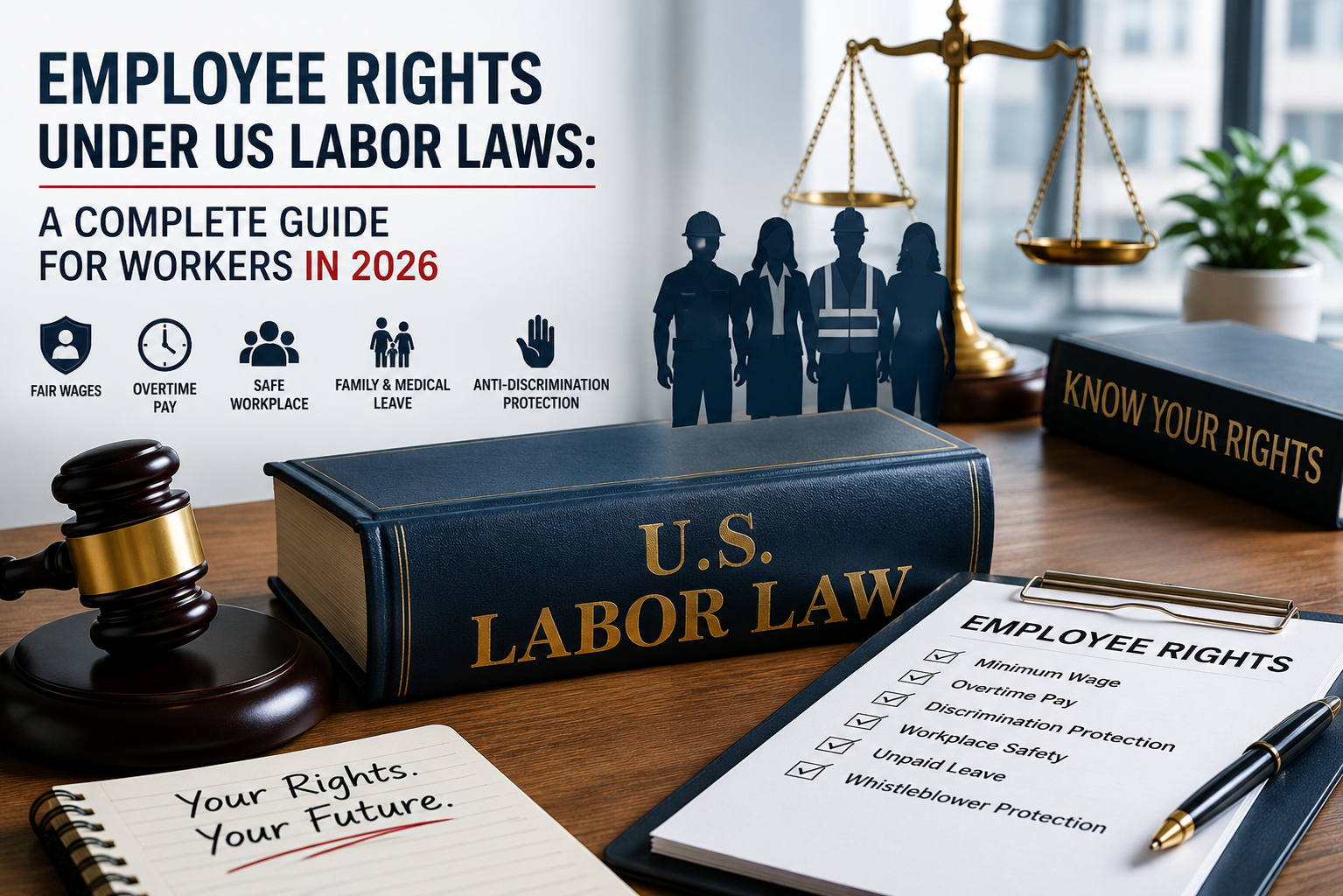
Foundational Rights: Wages and Hours
Minimum Wage and Overtime
The federal minimum wage remains $7.25 per hour, though many states and cities have significantly higher rates. The Fair Labor Standards Act (FLSA) requires covered employers to pay non-exempt employees overtime at 1.5 times their regular rate for hours worked over 40 in a workweek.
Key considerations in 2026:
- Many states have automatic annual increases in minimum wage
- Certain industries and roles may have specific exemptions
- Misclassification of employees as independent contractors remains a common issue
What to do if you suspect violations: Keep detailed records of hours worked and pay received. Many states have dedicated labor departments that investigate wage claims.
Breaks and Meal Periods: Federal law does not require breaks, but many states mandate rest breaks and meal periods. For example, California requires a 30-minute unpaid meal break for shifts over 5 hours.
Protection Against Discrimination and Harassment
Federal Protections: Several important laws safeguard employees from discrimination:
- Title VII of the Civil Rights Act: Prohibits discrimination based on race, color, religion, sex, and national origin
- Age Discrimination in Employment Act (ADEA): Protects workers 40 years and older
- Americans with Disabilities Act (ADA): Requires reasonable accommodations for qualified individuals with disabilities
- Pregnancy Discrimination Act: Protects pregnant workers and those with related medical conditions
Sexual Harassment and Hostile Work Environment: Both quid pro quo harassment and hostile work environment claims are protected. Employers have a legal duty to prevent and address harassment.
Equal Pay: The Equal Pay Act and evolving state laws aim to address gender-based wage gaps. Many states have strengthened pay transparency requirements in recent years.
Family and Medical Leave Rights
Family and Medical Leave Act (FMLA): Eligible employees can take up to 12 weeks of unpaid, job-protected leave per year for:
- Serious health conditions
- Birth or adoption of a child
- Caring for a family member with a serious health condition
- Certain military family needs
Eligibility requirements: Generally, you must have worked for the employer for at least 12 months and 1,250 hours, and the employer must have 50 or more employees within 75 miles.
In 2026, some states offer paid family leave programs that complement federal protections.
Workplace Safety and Health
Occupational Safety and Health Administration (OSHA): OSHA requires employers to provide a workplace free from recognized hazards. Key rights include:
- The right to a safe workplace
- The right to report unsafe conditions without retaliation
- The right to access safety records and request inspections
- Protection from retaliation for raising safety concerns
In 2026, emerging areas of focus include mental health, workplace violence prevention, and protections related to new technologies.
Retaliation Protections
One of the most important yet frequently misunderstood protections is the right to be free from retaliation. Employers cannot legally punish employees for:
- Filing complaints about wage violations
- Reporting discrimination or harassment
- Requesting reasonable accommodations
- Participating in investigations
- Refusing to engage in illegal activities
Rights During Termination and Layoffs
At-Will Employment: Most U.S. states follow “at-will” employment, meaning either party can end the relationship at any time. However, exceptions exist for discrimination, retaliation, public policy, and contractual agreements.
Notice and Severance: Federal law does not generally require advance notice for individual terminations, but the Worker Adjustment and Retraining Notification (WARN) Act requires 60 days’ notice for large-scale layoffs under certain conditions.
Unemployment Benefits: Eligible workers who lose their jobs through no fault of their own can typically collect unemployment insurance.
Privacy Rights in the Workplace
Employee privacy protections have evolved with technology. Key areas include:
- Monitoring of company devices and email (generally permitted with notice)
- Drug testing policies
- Background checks and credit checks
- Protection of medical information
Many states have strengthened employee privacy protections regarding off-duty conduct and social media.
Union Rights and Collective Action
The National Labor Relations Act protects employees’ rights to engage in concerted activities for mutual aid or protection, including discussing wages and working conditions with colleagues.
Practical Steps for Protecting Your Rights
- Know Your Rights: Familiarize yourself with both federal and state-specific protections.
- Document Everything: Keep detailed, factual records of important workplace events.
- Review Company Policies: Understand your employee handbook and relevant procedures.
- Communicate Professionally: Address concerns through appropriate channels when possible.
- Seek Support When Needed: Consult HR, unions, government agencies, or employment attorneys as appropriate.
- Know When to Get Professional Help: For complex situations, speaking with an employment lawyer can provide clarity about your specific options.
Common Misconceptions
Many employees believe certain protections exist that actually don’t under current law, or they underestimate the rights they do have. Staying informed helps you advocate effectively for fair treatment.
Looking Forward in 2026 and Beyond
Labor laws continue to evolve in response to changing workplace dynamics, remote work trends, artificial intelligence in hiring, and greater awareness of mental health. Staying informed about developments in your state is valuable.
Final Thoughts
Understanding your rights as an employee is an important part of being an empowered worker. While workplace challenges can feel overwhelming, knowing the legal framework that protects you provides both practical tools and greater confidence.
Remember that exercising your rights responsibly often leads to better outcomes for everyone. Most employers want to maintain positive workplace relationships and comply with the law. When issues arise, clear communication combined with proper documentation frequently resolves problems effectively.
If you are facing a workplace concern, consider starting with a calm assessment of the situation and reviewing relevant policies and protections. Support is available through government agencies, legal aid organizations, unions, and qualified employment attorneys.
Your rights exist to protect your dignity, safety, and fair treatment at work. Taking informed action when necessary is not only your legal right — it contributes to healthier, more equitable workplaces for all.

William Radcliffe is the author behind meyy.org. With a strong interest in workplace rights and practical guidance for employees, he focuses on turning complex U.S. labor laws and employment issues into clear, approachable, and actionable information.Drawing from years of observing real workplace challenges, William writes to help readers better understand their rights, recognize important issues early, and feel more confident when navigating difficult situations at work.