I still remember the moment a friend called me, excited about landing what seemed like her dream job, but clearly anxious about the 15-page contract she had received. “It looks so formal and complicated,” she said. “I’m worried I might be signing away rights I don’t even know I have.” Like many professionals navigating career moves in 2026, she faced a common dilemma: the excitement of a new opportunity mixed with uncertainty about the legal document that would govern her working relationship for potentially years to come.

Employment contracts have become increasingly detailed and common across industries. While they can provide important clarity and protections, they can also contain provisions that significantly impact your compensation, career mobility, intellectual property rights, and exit options. Understanding what you’re agreeing to before signing is one of the smartest and most protective steps you can take in your professional life.
This comprehensive guide breaks down employment contracts in clear, practical terms, highlighting key clauses, potential pitfalls, negotiation strategies, and important considerations for workers in 2026.
What Is an Employment Contract and Why Does It Matter?
An employment contract is a legally binding agreement between an employee and employer that outlines the terms and conditions of employment. Unlike the default “at-will” employment common in most U.S. states (where either party can generally terminate the relationship at any time), a formal contract creates specific obligations and protections for both sides.
Contracts may be:
- Written (most common and recommended for clarity)
- Verbal (enforceable but harder to prove)
- Implied (through company policies, handbooks, or past practices)
In today’s competitive talent market, contracts are frequently used for executives, specialized technical roles, sales positions with commissions, and roles involving sensitive information or client relationships.
A well-drafted contract benefits both parties by setting clear expectations. However, poorly negotiated or one-sided agreements can create significant limitations on your future career options.
Essential Components of Most Employment Contracts
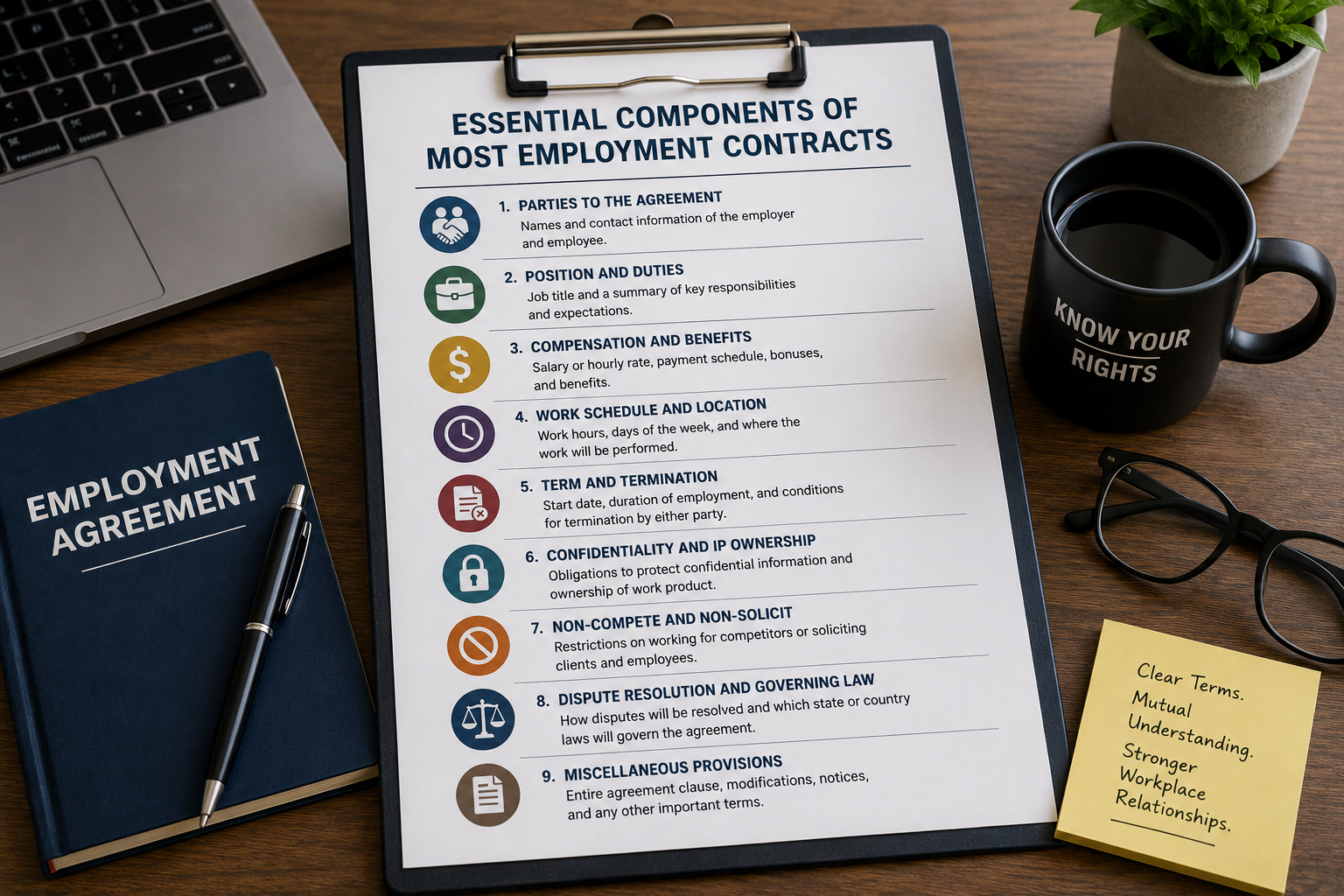
1. Compensation and Benefits Package
This section details how you will be paid and what additional benefits you’ll receive. Pay close attention to:
- Base salary or hourly rate
- Performance bonuses, commissions, and equity compensation
- Signing bonuses and relocation assistance (including repayment clauses)
- Health insurance, retirement contributions, and paid time off
- Expense reimbursement policies
Key questions to ask: Are bonus targets clearly defined and realistic? Are there “clawback” provisions requiring repayment of bonuses under certain conditions?
2. Job Title, Duties, and Reporting Structure
Look for clear descriptions of responsibilities. Be wary of overly broad language such as “and other duties as assigned,” which could allow significant changes to your role without additional compensation or title adjustment.
3. Term and Duration
- Fixed-term contracts (common for project-based or executive roles)
- Indefinite “at-will” arrangements with specific protections
- Renewal or extension provisions
4. Termination Provisions
This is one of the most critical sections. Understand:
- Notice periods required from either party
- “For cause” vs. “without cause” termination definitions
- Severance pay formulas and conditions
- Post-termination benefits continuation
Strong contracts often include meaningful severance protections, especially for more senior positions.
5. Restrictive Covenants (The Most Important Section for Many)
These clauses can have long-lasting impact on your career:
- Non-Compete Agreements: Limit your ability to work for competitors. In 2026, enforceability varies significantly by state. Some jurisdictions have banned or severely restricted them.
- Non-Solicitation Clauses: Prevent contacting former clients or colleagues after leaving.
- Non-Disclosure/Confidentiality Agreements: Protect company trade secrets and information.
- Non-Disparagement Clauses: Restrict negative statements about the employer.
- Garden Leave: Paid period during which you cannot work elsewhere.
Pay special attention to the geographic scope, duration, and scope of restricted activities. Overly broad restrictions may be unenforceable, but challenging them later can be expensive and time-consuming.
6. Intellectual Property and Ownership Rights
Modern contracts often contain broad provisions assigning ownership of inventions, creative works, code, or ideas developed during employment — and sometimes even outside working hours if related to the company’s business.
7. Dispute Resolution and Governing Law
Many contracts require binding arbitration rather than court litigation. Understand the implications for class actions, discovery rights, and appeal options. The contract will also specify which state’s laws govern interpretation.
8. Miscellaneous Provisions
- Modification clauses (can the employer change terms unilaterally?)
- Entire agreement clause (does this supersede previous verbal promises?)
- Survival clauses (which provisions continue after termination?)
Red Flags and Warning Signs
Exercise extra caution with contracts containing:
- Extremely broad or long-lasting non-compete clauses
- Minimal or no severance protections
- One-sided modification rights for the employer
- Requirements to repay large signing bonuses for relatively minor infractions
- Overly restrictive confidentiality terms that could limit future work
Effective Negotiation Strategies
Many employees assume employment contracts are non-negotiable. In reality, reasonable negotiation is often possible, particularly for mid-to-senior level positions or roles with specialized skills.
Best practices:
- Request time to review (3–7 business days is generally reasonable)
- Prioritize your most important concerns
- Propose specific alternative language rather than vague objections
- Consider trade-offs (e.g., accepting a shorter non-compete in exchange for higher severance)
- Get all agreed changes in writing as formal amendments
Having an experienced employment attorney review the document can provide valuable insights and often improves negotiation outcomes.
Special Considerations in 2026
Current trends affecting employment contracts include:
- Increased regulatory scrutiny of non-compete agreements
- Greater emphasis on remote and hybrid work provisions
- Evolving rules around artificial intelligence and ownership of AI-generated work
- Enhanced focus on mental health accommodations and work-life balance clauses
Common Pitfalls to Avoid
- Signing under time pressure without full understanding
- Assuming verbal assurances will override written terms
- Underestimating the long-term impact of restrictive covenants
- Failing to consider state-specific laws (especially if relocating)
- Not planning for various exit scenarios
When to Consult an Employment Attorney
Strongly consider professional legal review if:
- The position is senior, highly compensated, or highly specialized
- The contract contains complex or restrictive covenants
- You’re making a significant career transition or relocation
- You have concerns about any provisions
- You have previous contracts with overlapping restrictions
Many employment attorneys offer flat-fee contract review services that prove to be excellent investments.
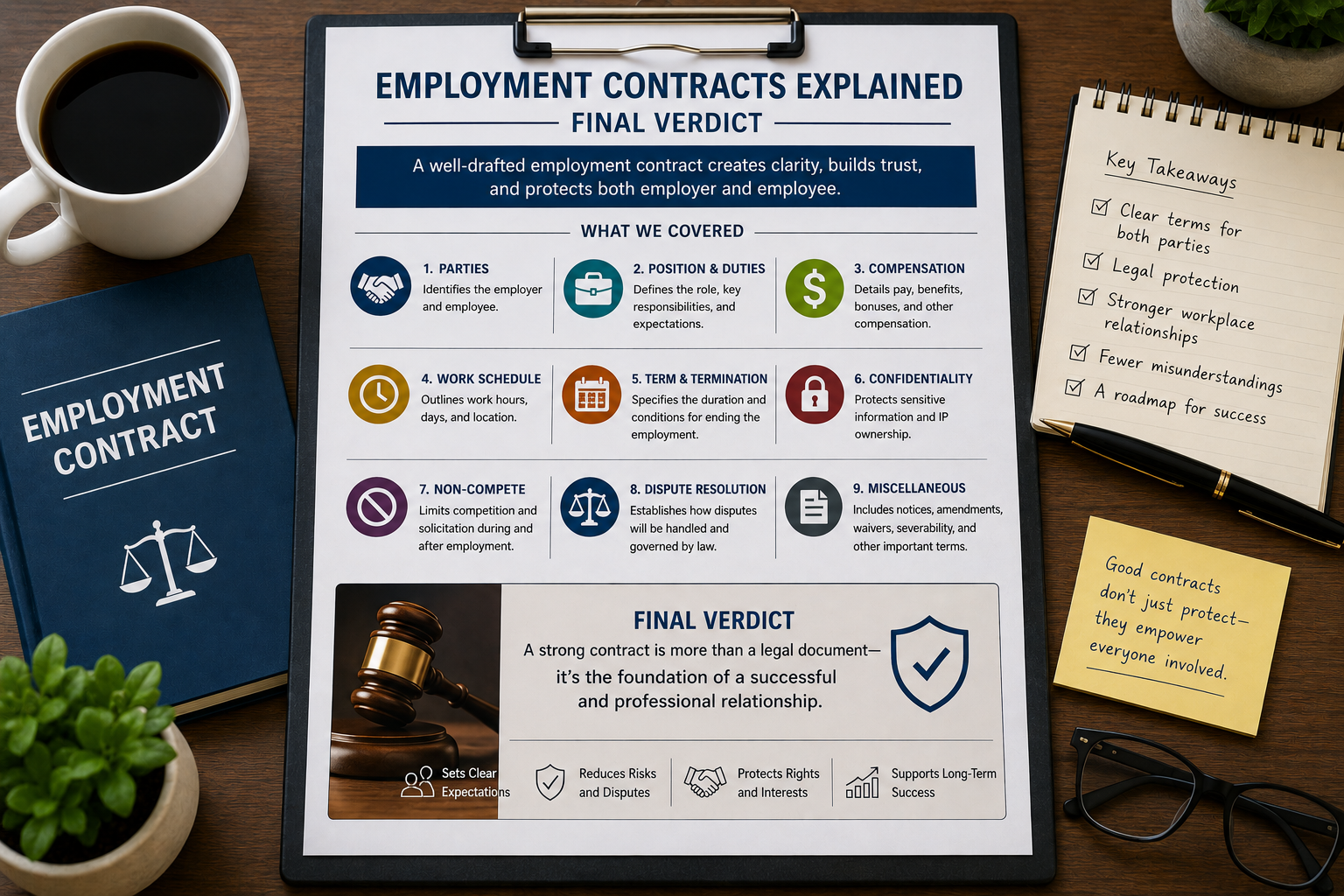
Final Thoughts
An employment contract is much more than routine paperwork — it establishes the foundational rules that will govern your working relationship, often for years. Taking the time to read carefully, understand the implications, ask questions, and negotiate where appropriate demonstrates professionalism and self-advocacy.
The best contracts create clarity and fairness for both parties, setting the stage for a successful and mutually beneficial relationship. By approaching the process thoughtfully, you protect not only your immediate interests but also your long-term career mobility and options.
Before signing any employment contract, give yourself permission to fully understand what you’re agreeing to. This thoughtful approach can prevent future complications and help you begin your new role with greater confidence and peace of mind.
If you’re currently reviewing an employment offer or contract, consider the long-term implications of each provision carefully. Taking the time to understand and, when appropriate, negotiate terms is one of the most valuable investments you can make in your professional future.

William Radcliffe is the author behind meyy.org. With a strong interest in workplace rights and practical guidance for employees, he focuses on turning complex U.S. labor laws and employment issues into clear, approachable, and actionable information.Drawing from years of observing real workplace challenges, William writes to help readers better understand their rights, recognize important issues early, and feel more confident when navigating difficult situations at work.