I remember the day a colleague reached out to me, her voice carrying a mixture of exhaustion, frustration, and quiet determination. For months, she had faced repeated discriminatory comments and unfair treatment at work based on her gender and ethnicity. After trying internal channels without success, she was considering filing a formal complaint with the Equal Employment Opportunity Commission (EEOC) but felt completely overwhelmed by the process. “I don’t know where to begin,” she confessed. “I’m worried about making mistakes or facing retaliation.”

Her experience reflects what many workers face when confronting workplace discrimination or harassment. In 2026, the EEOC remains one of the most important federal agencies protecting employee rights. While the process can feel intimidating, understanding it clearly can empower you to take informed, strategic action.
Important Disclaimer: This article provides general educational information only and is not legal advice. Employment laws are complex and highly fact-specific. For personalized guidance, consult with an employment attorney, the EEOC directly, or other qualified professionals.
Understanding the EEOC and Its Role
The U.S. Equal Employment Opportunity Commission (EEOC) is the federal agency responsible for enforcing civil rights laws against workplace discrimination. It investigates charges of discrimination based on protected characteristics, including race, color, religion, sex (including pregnancy, sexual orientation, and gender identity), national origin, age (40 and older), disability, and genetic information. The agency also protects employees from retaliation for engaging in protected activities.

Filing an EEOC charge is often a prerequisite before pursuing a private lawsuit under federal anti-discrimination laws. The agency serves as both an investigator and, in some cases, a mediator.
When Should You Consider Filing?
Not every difficult workplace situation warrants an EEOC complaint. Consider filing when you have experienced:
- Discrimination in hiring, promotion, pay, or termination
- Harassment creating a hostile work environment
- Denial of reasonable accommodations for disabilities
- Retaliation for complaining about discrimination
- Discriminatory policies or practices
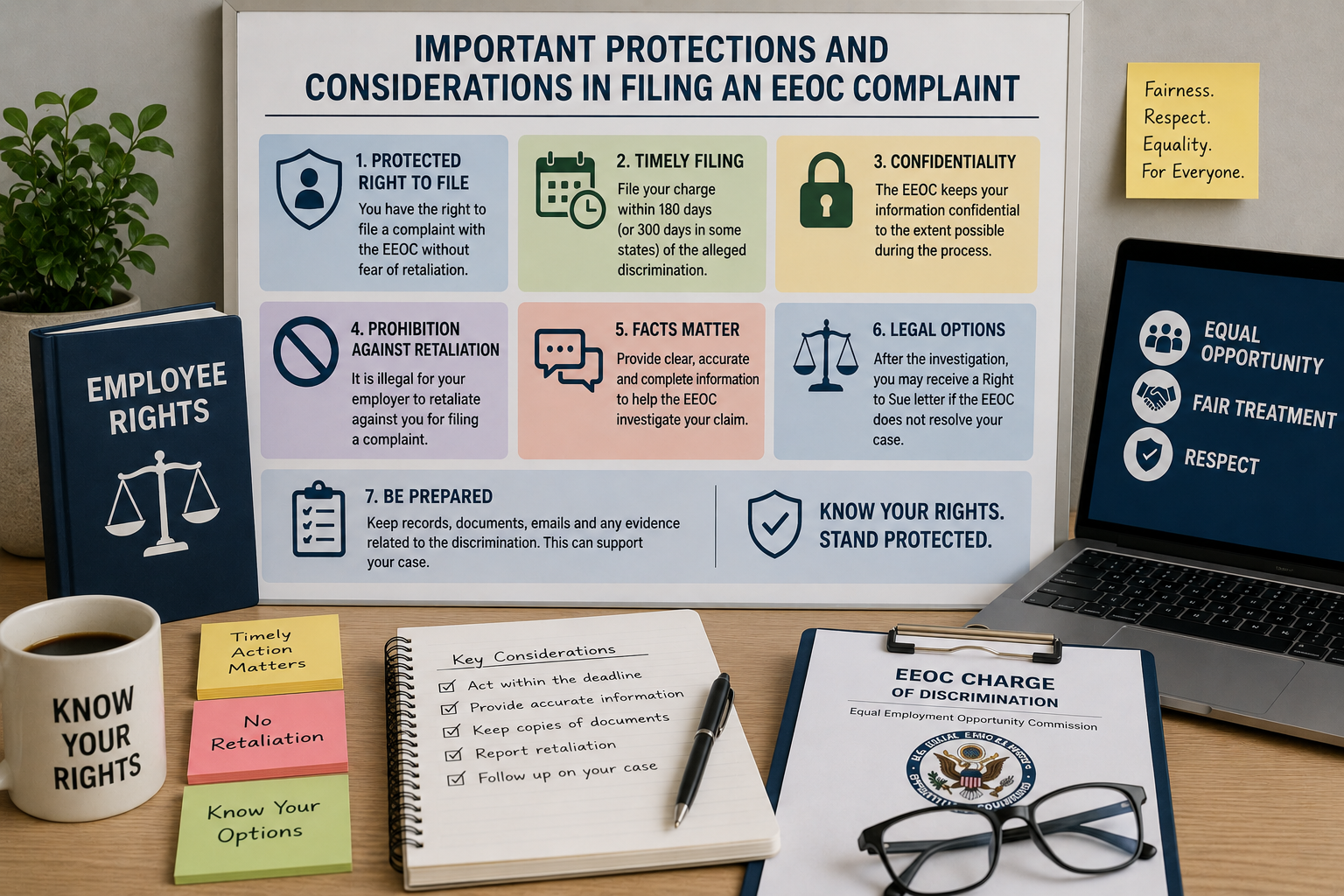
Generally, you have 180 days from the date of the discriminatory act to file (or up to 300 days in states with their own fair employment practices agencies). Missing these deadlines can bar you from pursuing your claim.
Step 1: Thorough Documentation — Building a Strong Foundation
Strong, contemporaneous documentation is often the most critical element of a successful charge.
Create a detailed record including:
- Exact dates, times, and locations of each incident
- Clear, factual descriptions of what occurred
- Names and titles of individuals involved
- Names of witnesses present
- Your response to the situation
- Impact on your work performance, mental health, and career opportunities

Practical tips:
- Use a secure, private method (personal notebook or password-protected digital document)
- Maintain a chronological timeline
- Save copies of relevant emails, performance reviews, disciplinary notices, and communications
- Document any retaliatory actions immediately
Example entry: “February 28, 2026 – 11:15 AM – During team meeting in Conference Room 4. Supervisor X made repeated comments about my accent and questioned my ability to communicate effectively with clients in front of six colleagues. I responded professionally but felt humiliated and distracted for the remainder of the day.”
Step 2: Attempt Internal Resolution (When Appropriate and Safe)
Many employees first try resolving issues internally:
- Direct conversation with the person involved (if safe)
- Reporting to HR, management, or compliance departments
- Following the company’s formal grievance procedure
Document all internal efforts thoroughly. This demonstrates good faith and can strengthen your EEOC case if internal processes prove inadequate or lead to retaliation.
Step 3: Research and Preparation
Before filing:
- Review relevant company policies
- Gather supporting evidence
- Consider consulting an employment attorney for initial guidance
- Research the EEOC filing process and deadlines for your specific situation
Step 4: Filing the EEOC Charge
Methods available in 2026:
- Online filing via the EEOC Public Portal (recommended for convenience and speed)
- In-person filing at a local EEOC office
- Mail or fax
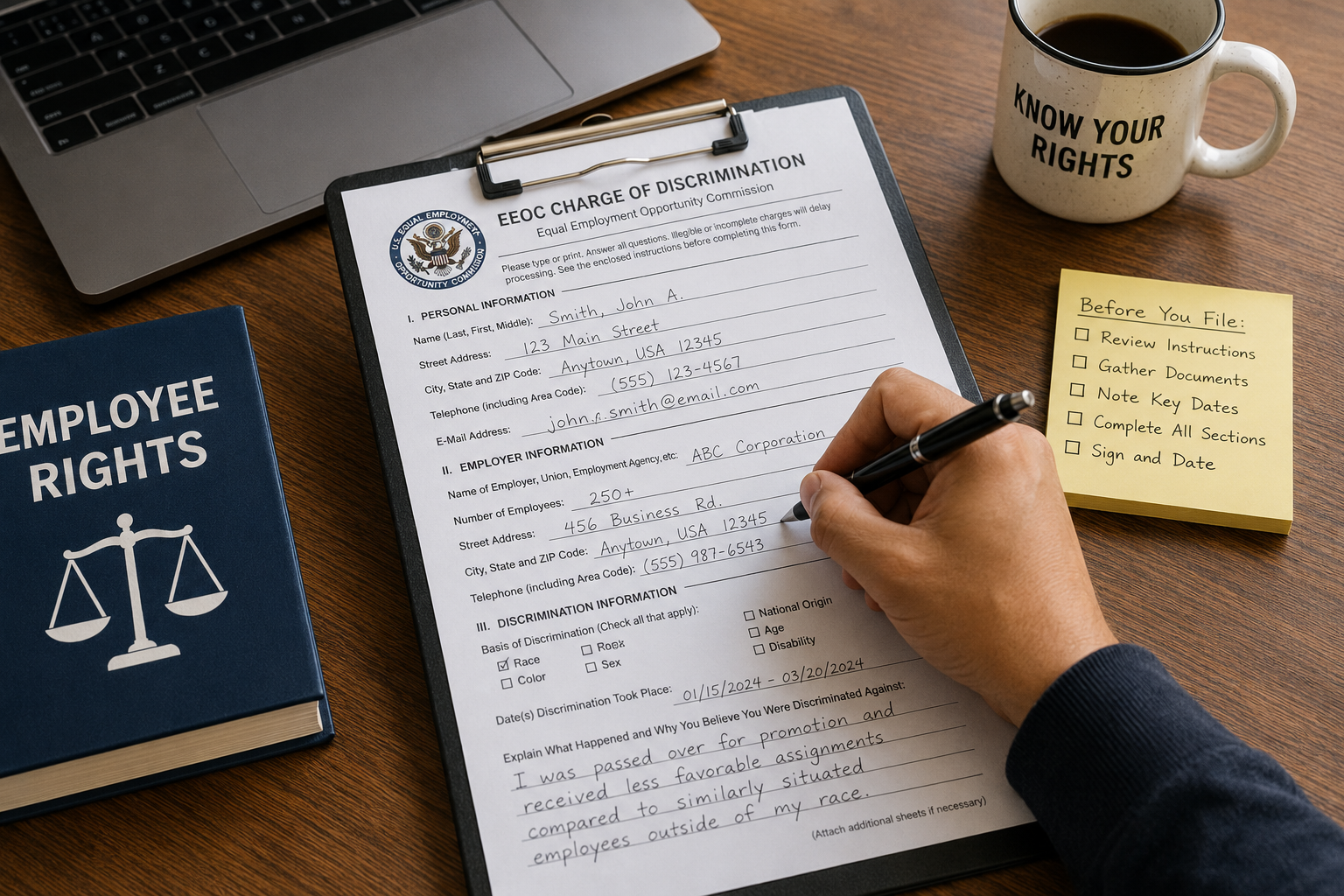
The initial charge form requires basic information about you, your employer, and a description of the alleged discrimination. Be factual, specific, and concise in your description. You do not need to cite specific laws — the EEOC will evaluate based on the facts.
After filing, the EEOC will assign an investigator and typically notify your employer of the charge.
Step 5: The Investigation Process
The EEOC investigation may include:
- Requests for information and documents from both parties
- Interviews with you, the employer, and witnesses
- Possible site visits
- Mediation attempts
The process can take several months (sometimes longer). Stay in regular communication with your assigned investigator and continue documenting any new developments.
Step 6: Understanding Possible Outcomes and Next Steps
Common outcomes include:
- Right to Sue Letter: Allows you to file a private lawsuit in federal court
- Mediation or Settlement: Facilitated resolution without full investigation
- Reasonable Cause Finding: The EEOC may pursue the case or issue a determination
- Dismissal: You can still pursue a lawsuit in most cases within strict time limits
Important Protections and Considerations
Anti-Retaliation Protections: Federal law strongly prohibits retaliation against employees who file EEOC charges or participate in investigations. Document any adverse actions promptly.
Emotional and Practical Support: The process can be stressful. Consider counseling, support groups, or employee assistance programs.
Working with an Attorney: Many people benefit from legal representation, especially as the case progresses. Some attorneys work on contingency or offer initial consultations at no cost.
Common Mistakes to Avoid
- Missing filing deadlines
- Failing to document incidents contemporaneously
- Using emotional rather than factual language in the charge
- Not keeping copies of all communications with the EEOC
- Ignoring signs of retaliation
- Assuming the process will be quick
Alternatives and Complementary Approaches
Depending on your situation, you might also consider:
- State or local fair employment agencies
- Union grievance procedures (if applicable)
- Internal company channels
- Direct negotiation or mediation
Final Thoughts
Filing an EEOC complaint is a serious but important step for addressing workplace discrimination. By approaching the process with thorough documentation, clear understanding of the steps, and appropriate support, you put yourself in the strongest possible position to seek resolution and protect your rights.
Remember that taking action to address discrimination not only helps your individual situation but also contributes to creating fairer, more equitable workplaces for everyone. You are not alone in this process, and resources are available to support you.
If you believe you have experienced workplace discrimination, consider reaching out to the EEOC directly through their website or local office. Consulting with a qualified employment attorney can also provide valuable personalized guidance for your specific circumstances.
Taking informed, thoughtful action to protect your rights demonstrates both courage and professionalism. You deserve to work in an environment where you are treated with dignity and respect.

William Radcliffe is the author behind meyy.org. With a strong interest in workplace rights and practical guidance for employees, he focuses on turning complex U.S. labor laws and employment issues into clear, approachable, and actionable information.Drawing from years of observing real workplace challenges, William writes to help readers better understand their rights, recognize important issues early, and feel more confident when navigating difficult situations at work.