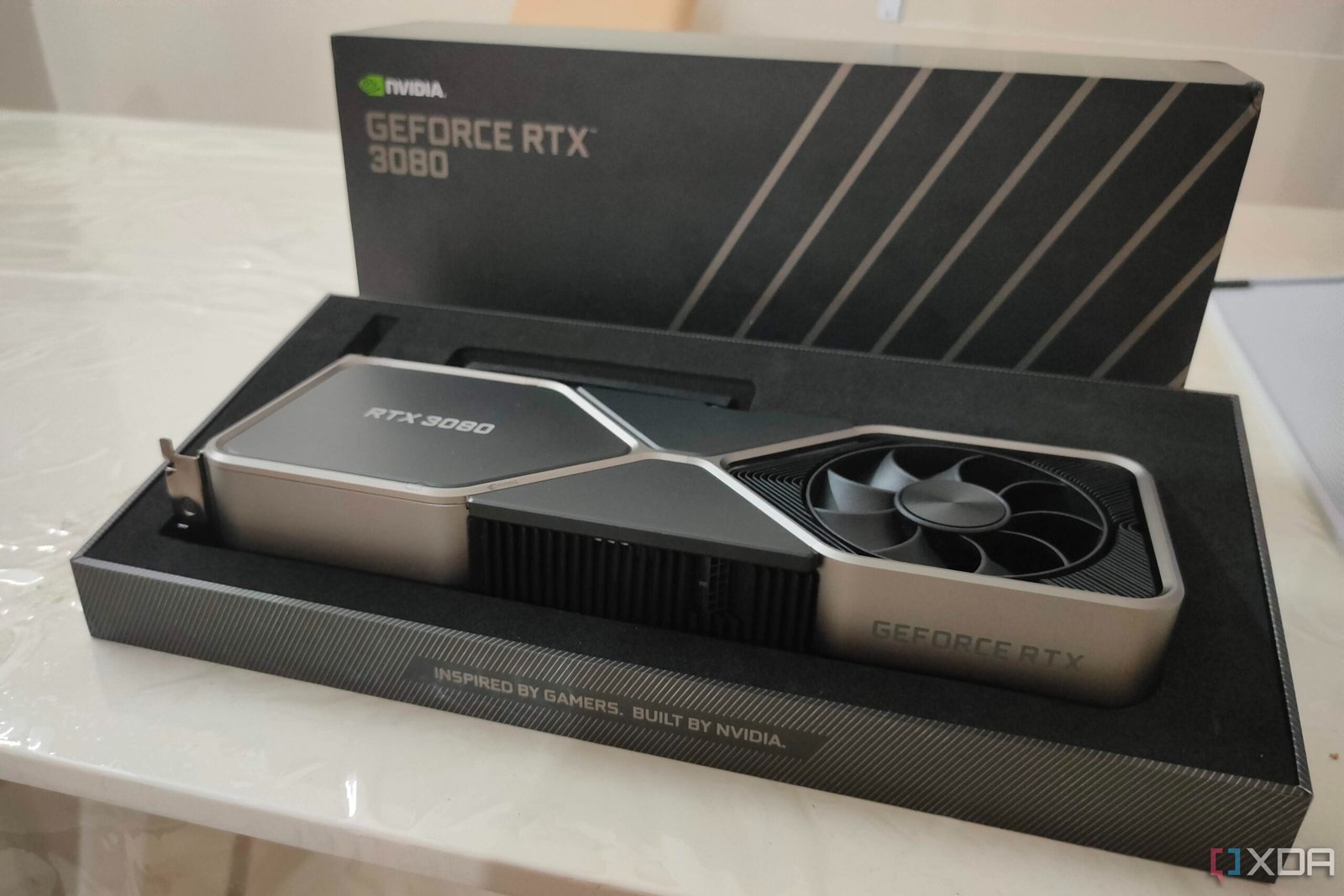
The first time I owned a “high-end” GPU was in 2022, when I got my current gaming rig with an RTX 3080. Over the last three years, it’s been a great experience overall; after all, the card was a massive upgrade over my previous GTX 1660 Ti. That said, there have been some disappointments along the way that I want to put out there. A high-end GPU offers great performance, but it doesn’t magically solve the optimization issues plaguing modern titles. Plus, it doesn’t stay high-end for long, and it can sometimes introduce some weird behavior in the rest of your setup.

Related
4
Certain titles can still bring it to its knees
High-end isn’t the be-all and end-all
Although the RTX 3080 was one of the fastest GPUs in the world back in September 2022 (just before the RTX 40 series launched), playing Cyberpunk 2077 with it didn’t really feel like I could crank the in-game settings to 11. I had to lower some settings to get 60+ FPS, and there was no path tracing to speak of. This wasn’t an older-gen flagship trying its hand at a next-gen game; both the RTX 3080 and Cyberpunk 2077 launched in the same year (2020), but it was just one of those titles that could make any GPU sweat.
No matter which GPU you have, there will always be games that will humble even the high-end cards. This was one of the first surprising revelations I had after using a high-end, 80-class GPU for the first time. For my RTX 3080, it was Cyberpunk 2077; for your RTX 40 or RTX 50 series card, it could be Alan Wake 2, Black Myth: Wukong, or Flight Simulator 2024.
Even if you buy a high-end flagship card at launch, you can’t guarantee that it will breeze through every single AAA game out there. Even the RTX 4090 and RTX 5090 struggle with the most demanding titles.
3
Even high-end cards need crutches like upscaling and frame generation
No GPU is immune
Tools like upscaling and frame generation in the form of DLSS, FSR, and XeSS might be known best for keeping budget GPUs relevant, but high-end GPUs are equally dependent on them. Even the RTX 5090 in Flight Simulator 2024 barely scrapes past 60 FPS at 4K, and even 1440p, without the aid of upscaling or frame generation.
This might be an extreme example, but the fact is that getting a high-end card doesn’t automatically make you immune to upscalers or AI-generated frames. The state of many AAA games these past few years has been disappointing, to say the least. Optimization leaves a lot to be desired, due to which even supposedly powerful cards struggle to deliver excellent performance. Despite investing a grand in a GPU, you can’t expect respectable performance without turning on DLSS or FSR.
Upscaling, and now frame generation, have entrenched themselves deep in the gaming ecosystem, so much so that it is second nature to turn them on whenever you launch a new game for the first time. The worst part is that you can’t avoid these tools even on your fancy high-end graphics card.

2
There have been unexpected effects on other parts of my setup
A minor annoyance, but still relevant

There’s one peculiar issue I have to deal with on my RTX 3080 that was never present on my GTX 1660 Ti. Whenever the system load increases beyond a point (only when I’m playing a demanding game), my 1100VA UPS starts beeping incessantly. Apparently, this is to alert me that if the power goes out, it won’t be able to sustain the load, and the PC will shut down instantly. I can’t disable the beeps; the only way they go away is if the total load is reduced.
Even undervolting the GPU doesn’t seem to solve the issue permanently; it always comes back during one game or the other. Due to the lower performance class and power consumption of the older GTX 1660 Ti, this issue never happened with that GPU. I have to buy a UPS with a higher capacity if I want to get rid of these annoying beeps, and that’s not a cheap solution at all. Of course, this doesn’t mean I’d go back to a weaker GPU to solve the issue, but this is an annoyance worth considering if you use a UPS with your system.

Related
How to check the power consumption of your PC
If you’re worried about how much energy your PC is using, then this guide will show you how to find out exactly how much.
1
It can feel outdated sooner than you think
Nothing lasts forever
When you buy an expensive, high-end graphics card, you’re probably hoping to enjoy high-end gaming for a few years before you even need to think about upgrading. My experience with the RTX 3080, however, has been less than ideal. Granted, I only got the card around two years after its launch, but with the launch of the RTX 40 series, it started feeling outdated sooner than I had imagined.
In late 2022, the RTX 3080 was just one generation old, and it was basically an RTX 4070 with less VRAM. Still, the RTX 4080 ended up being around 50% faster than the RTX 3080, and the lack of support for frame generation on my GPU didn’t help either. The RTX 50 series wasn’t as big a leap over the RTX 40 series, but overall, no high-end graphics card stays at the top for long. And if you’ve invested $800–$1200 in one, it sucks to be the one left holding the bag.
The point is that investing in a mid-range GPU instead of a high-end one might make sense in some scenarios, especially in 2025, when you don’t need a high-end GPU for high-end gaming, thanks to cards like the RX 9070 XT. You don’t spend a grand, enjoy excellent 1440p and even 4K gaming, and are more willing to upgrade if something better comes along.

Related
5 reasons I’m never buying a high-end GPU again and you shouldn’t either
High-end graphics cards don’t justify the premium. I can save hundreds of dollars and still get a superb gaming experience with a mid-range card.
High-end GPUs aren’t always what you hope for
As a lifetime user of budget GPUs, I had high, and maybe unreasonable, hopes for what owning a high-end GPU would feel like. It wasn’t a silver bullet to end all the performance woes I had with AAA games, or powerful enough to provide a high-end gaming experience for over two generations. If you’re buying a high-end GPU, the best you can hope for is a good two-year run at the top of the game, but not without the help of upscaling and frame generation.