I still remember standing in a massive stone yard five years ago, feeling completely overwhelmed. Slabs of granite, quartz, and marble were lined up like soldiers, each one more beautiful than the last. The salesperson was throwing around technical terms — porosity, veining, engineered stone, Mohs hardness scale — and all I could think was, “I just want something that looks nice and won’t drive me crazy in five years.”
That experience taught me a valuable lesson: choosing countertops is one of the most important (and expensive) decisions in a kitchen remodel. It’s not just about beauty. It’s about daily life — how it holds up to spills, hot pans, kids doing homework, and late-night cooking sessions.
In 2026, the options are better and more varied than ever. Manufacturers have improved durability, expanded color choices, and introduced smarter materials. But with more choices comes more confusion. In this guide, I’ll walk you through an honest, in-depth comparison of the five most popular countertop materials: Quartz, Granite, Marble, Butcher Block, and Solid Surface. I’ll share what I’ve learned from my own projects and from helping friends and family.
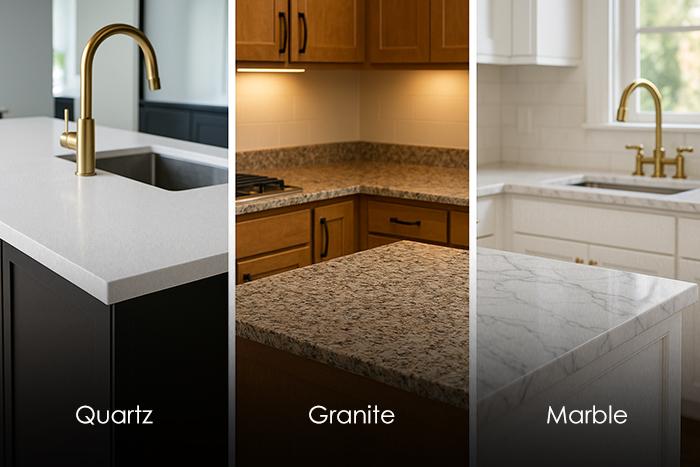
Best Kitchen Countertops
Quartz (Engineered Stone) – The Modern All-Rounder
Quartz has steadily taken over as the most popular countertop material, and for good reason. It’s made by combining crushed natural quartz with resin and pigments.
Pros:
- Exceptional durability and scratch resistance
- Non-porous surface that resists stains beautifully
- Huge variety of colors and patterns — including realistic marble and granite looks
- Consistent appearance from slab to slab
- Low maintenance — simple soap and water cleaning
- Hygienic and resistant to bacteria
- Good heat resistance (though not completely heat-proof)
Cons:
- Can feel a bit “perfect” or manufactured compared to natural stone
- Heat sensitivity — always use trivets for very hot pots
- Higher price point than laminate or basic solid surface
- Some lower-quality versions can yellow over time in direct sunlight
Real-life performance: I installed quartz in my current kitchen three years ago. It has survived red wine spills, tomato sauce disasters, kids’ craft projects, and countless hot dishes. It still looks nearly brand new with almost zero effort on my part.
Cost range in 2026: $60–$120 per square foot installed, depending on brand and thickness.
Best for: Busy households, families with children, people who want low maintenance without sacrificing beauty, and modern or transitional kitchen styles.
Granite (Natural Stone) – The Classic Beauty
Granite offers that authentic natural stone appeal that many homeowners crave.
Pros:
- Every slab is unique with stunning natural patterns and colors
- Excellent heat resistance — you can set hot pans directly on it
- Extremely durable when properly sealed
- Timeless look that holds resale appeal
- Can develop a beautiful patina over decades
Cons:
- Requires regular sealing (typically every 12–24 months)
- Porous nature means it can stain if neglected
- Natural variation means you might fall in love with a slab that isn’t available in the quantity you need
- Heavier material, which increases installation costs
- Can chip more easily than quartz on edges
Maintenance reality: Many people underestimate how much they’ll actually seal their granite. If you’re the type who stays on top of home maintenance, granite can be wonderful. If not, it might frustrate you later.
Cost range in 2026: $55–$110 per square foot installed.
Best for: Traditional and transitional kitchens, homeowners who enjoy the character of natural stone, and people willing to invest time in maintenance.
Marble – The Luxurious Romantic
Marble is the material people fall in love with in magazines and luxury home tours.
Pros:
- Incredibly elegant and sophisticated appearance
- Cool surface that’s perfect for baking pastry and working with chocolate
- Develops a unique patina and story over time
- Timeless beauty that never goes out of style
Cons:
- Highly porous — stains easily from wine, coffee, oils, and acids
- Scratches and etches relatively easily (lemon juice and vinegar can damage it)
- Requires diligent sealing and careful use
- Expensive, especially high-quality varieties like Carrara or Calacatta
- Shows every mark, which can be charming or stressful depending on your personality
Honest verdict: Marble is best used selectively. Many designers recommend it for low-traffic areas, baking stations, or islands where it becomes a statement piece rather than the main workhorse.
Cost range in 2026: $70–$150+ per square foot installed.
Best for: Light-use kitchens, serious home bakers, design-focused homeowners who accept maintenance as part of the luxury.
Butcher Block (Wood) – Warm and Approachable
Butcher block brings a completely different feeling to a kitchen — warmth, character, and approachability.
Pros:
- Beautiful natural wood grain that adds warmth
- Gentle on knives and great for food prep
- Can be sanded and refinished multiple times over its lifetime
- More affordable than most stone options
- Can be DIY-friendly for minor repairs
- Pairs wonderfully with other materials
Cons:
- Requires regular maintenance with food-grade mineral oil
- Susceptible to stains, scratches, burns, and water damage
- Can warp if exposed to excessive moisture
- Shows wear — which some people love as character, others see as aging
Modern twist: Many people in 2026 are using butcher block creatively — on islands or prep sections only — while using more durable stone on the perimeter counters. This combination gives you the best of both worlds.
Cost range in 2026: $45–$90 per square foot installed (varies greatly by wood type).
Best for: Casual, lived-in kitchens, people who cook a lot and want a warm aesthetic, and those who enjoy maintaining their space.
Solid Surface – The Underrated Practical Choice
Solid surface materials (such as Corian and similar brands) don’t get as much attention as they used to, but they still offer real advantages.
Pros:
- Seamless construction — perfect for integrated sinks with no crevices
- Repairable — scratches, burns, and stains can often be sanded or buffed out
- Wide range of solid colors and patterns
- Non-porous and hygienic
- Good value for money
Cons:
- Can scratch and dent more easily than quartz or granite
- Heat sensitive (requires trivets)
- Some people find the look less premium
- Limited edge profile options compared to stone
Cost range in 2026: $50–$85 per square foot installed.
Best for: Budget-conscious remodels, modern minimalist kitchens, and homeowners who value seamless looks and repairability.
Key Factors to Consider Before Choosing
Durability & Maintenance — Be honest about your lifestyle. Do you want something nearly indestructible or are you okay with some care?
Budget — Factor in not just material cost but also fabrication, installation, and long-term maintenance.
Aesthetics — Do you prefer the consistency of quartz, the uniqueness of natural stone, or the warmth of wood?
Resale Value — Quartz and granite tend to perform well for resale in most markets.
Sustainability — Some quartz and solid surface options now use recycled materials. Wood can be sustainable if responsibly sourced.
Mixing Materials — One of the smartest trends in 2026 is combining materials. Quartz perimeter counters with a butcher block island is extremely popular and practical.
Pro Tips for Making the Right Decision
- Always view large samples or full slabs in person under different lighting
- Ask for references from recent installations
- Consider your climate — humidity and temperature swings affect wood more
- Get everything in writing regarding warranties and maintenance requirements
- Think about your sink choice early — it affects edge details and material compatibility
Final Thoughts
After helping multiple people choose countertops and living with different materials myself, I’ve learned there is no single “best” option. The right choice depends entirely on your priorities, cooking habits, family dynamics, and willingness to maintain the surface.
For most modern families in 2026, quartz offers the best balance of beauty, durability, and low maintenance. But if you value natural uniqueness and don’t mind some upkeep, granite or marble might speak to you. If warmth and character matter most, butcher block (often mixed with stone) can make your kitchen feel truly special.
Take your time with this decision. Visit showrooms, talk to people who have lived with each material for several years, and imagine yourself actually using the kitchen day after day. The perfect countertop won’t just look good in photos — it will make your daily life in the kitchen noticeably better.
What are you leaning toward for your kitchen? Are you torn between quartz and granite, thinking about butcher block, or considering mixing materials? Tell me about your space, budget, family situation, and cooking style, and I’d be happy to give you more personalized recommendations.

Karl Hunter is a professional writer, researcher, and digital content strategist dedicated to producing well-researched, engaging, and informative content. With a passion for simplifying complex topics, Karl specializes in creating articles that help readers make informed decisions across business, finance, technology, education, and nonprofit initiatives.