Buying a home is a major financial decision, and one of the smartest steps a prospective buyer can take before seriously shopping for a property is getting mortgage preapproval.
A mortgage preapproval gives you an early indication of how much a lender may be willing to lend based on information about your income, assets, debts, credit history, and other financial circumstances. It can also make your offer more attractive because sellers can see that you have already taken steps toward arranging financing. The Consumer Financial Protection Bureau (CFPB) describes a preapproval letter as a statement that a lender is tentatively willing to lend up to a specified amount, although it is not a guaranteed loan offer. Consumer Financial Protection Bureau
For homebuyers in the United States, preapproval can also help establish a realistic shopping budget. Instead of looking at houses without knowing what financing might be available, buyers can enter the market with a better understanding of their potential borrowing range.
However, a preapproval is not the same thing as final mortgage approval. Your lender may still need to verify your income, employment, assets, debts, credit information, and the property itself before the mortgage can close. Your financial circumstances can also change between preapproval and closing.
This complete guide explains how mortgage preapproval works, what lenders look at, what documents you may need, how long the process takes, how much it costs, how preapproval differs from prequalification, and how to use a preapproval strategically when buying a home in the United States.
What Is Mortgage Preapproval?
Mortgage preapproval is an evaluation by a mortgage lender that indicates how much you may be able to borrow for a home purchase.
During the process, the lender reviews financial information such as your income, debts, assets, credit history, and employment. Based on its review and applicable underwriting criteria, the lender may issue a preapproval letter stating that you are tentatively eligible for financing up to a certain amount.
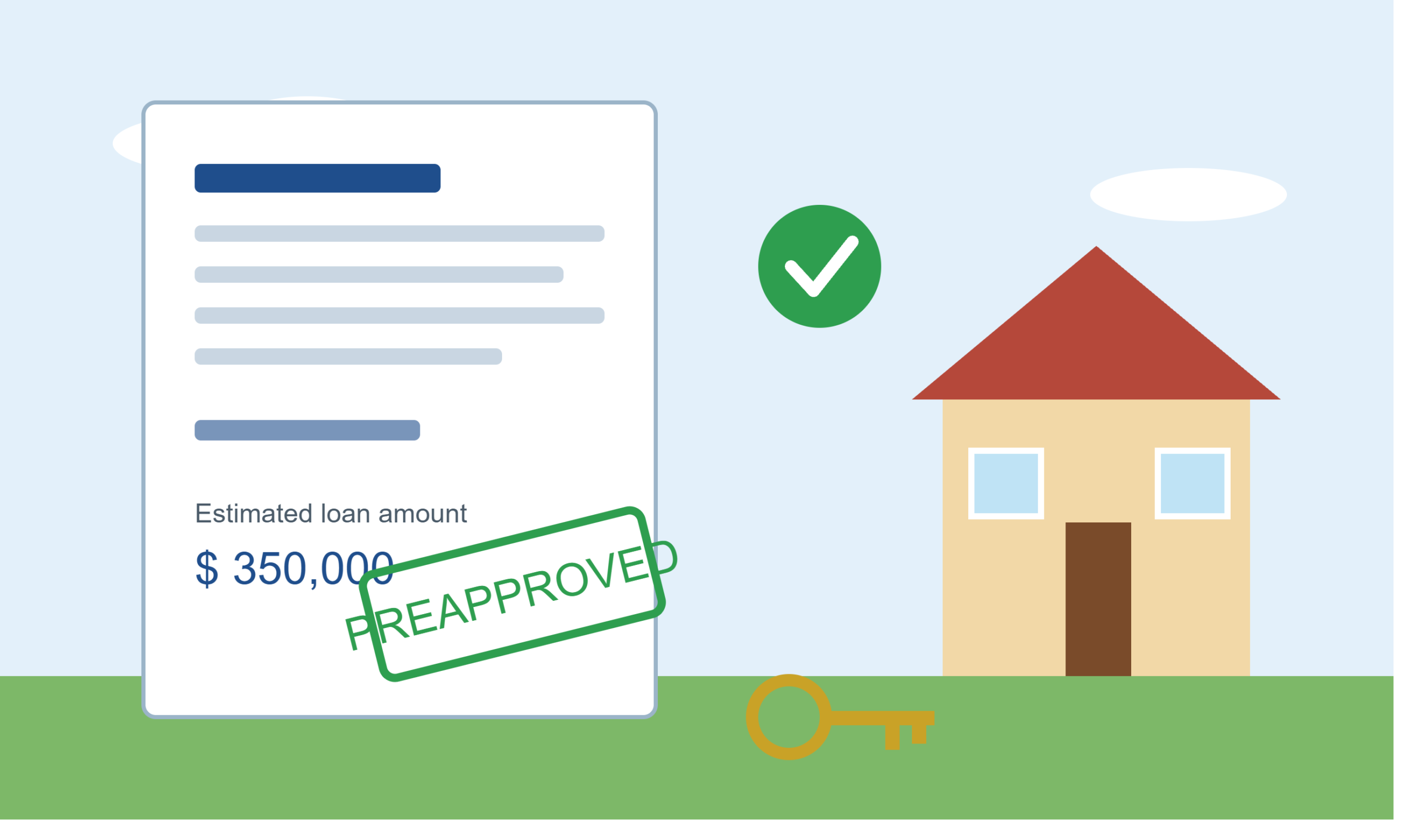
For example, a lender might provide a preapproval indicating that you could potentially qualify for a mortgage of up to $350,000.
That does not necessarily mean you should purchase a $350,000 home.
Your actual comfortable home-buying budget may be lower after considering property taxes, homeowners insurance, maintenance, utilities, HOA fees, savings goals, and other household expenses.
The CFPB specifically notes that the amount a lender preapproves you for is not necessarily the amount you can comfortably afford. Consumer Financial Protection Bureau
Why Is Mortgage Preapproval Important?
Getting preapproved can provide several advantages before you begin making offers.
It Helps Establish Your Price Range
A preapproval gives you a better idea of the mortgage amount a lender may be willing to provide.
This can help you avoid spending significant time looking at homes that may be outside your realistic financing range.
It Shows Sellers You Are a Serious Buyer
In competitive markets, sellers may prefer offers from buyers who have already taken steps toward obtaining financing.
A preapproval letter can demonstrate that you have contacted a lender and undergone an initial financial review.
It Can Speed Up the Buying Process
If you’ve already gathered financial documents and gone through an initial lender review, some parts of the mortgage process may be easier once you have an accepted offer.
It Can Reveal Financial Problems Early
Preapproval can uncover issues involving credit, income documentation, debts, or assets before you’re under pressure to close on a specific property.
This gives you time to address potential problems.
It Helps You Compare Lenders
Getting preapproved by multiple lenders can help you understand what different lenders may offer.
The CFPB recommends contacting multiple lenders and says consumers should aim to compare at least three loan offers. Consumer Financial Protection Bureau
How Does Mortgage Preapproval Work?
The mortgage preapproval process generally follows several stages.
Step 1: Review Your Finances
Before contacting lenders, review your:
- Income
- Monthly debts
- Credit history
- Savings
- Investments
- Down-payment funds
- Employment history
- Existing housing costs
Understanding your finances can help you determine what type of mortgage might be appropriate.
Step 2: Check Your Credit
Mortgage lenders generally review credit information as part of the lending process.
Your credit profile can influence your eligibility and the terms you may receive.
Before applying, review your credit reports for errors or outdated information.
Step 3: Gather Your Documents
Lenders generally need documentation supporting the financial information used to evaluate your application.
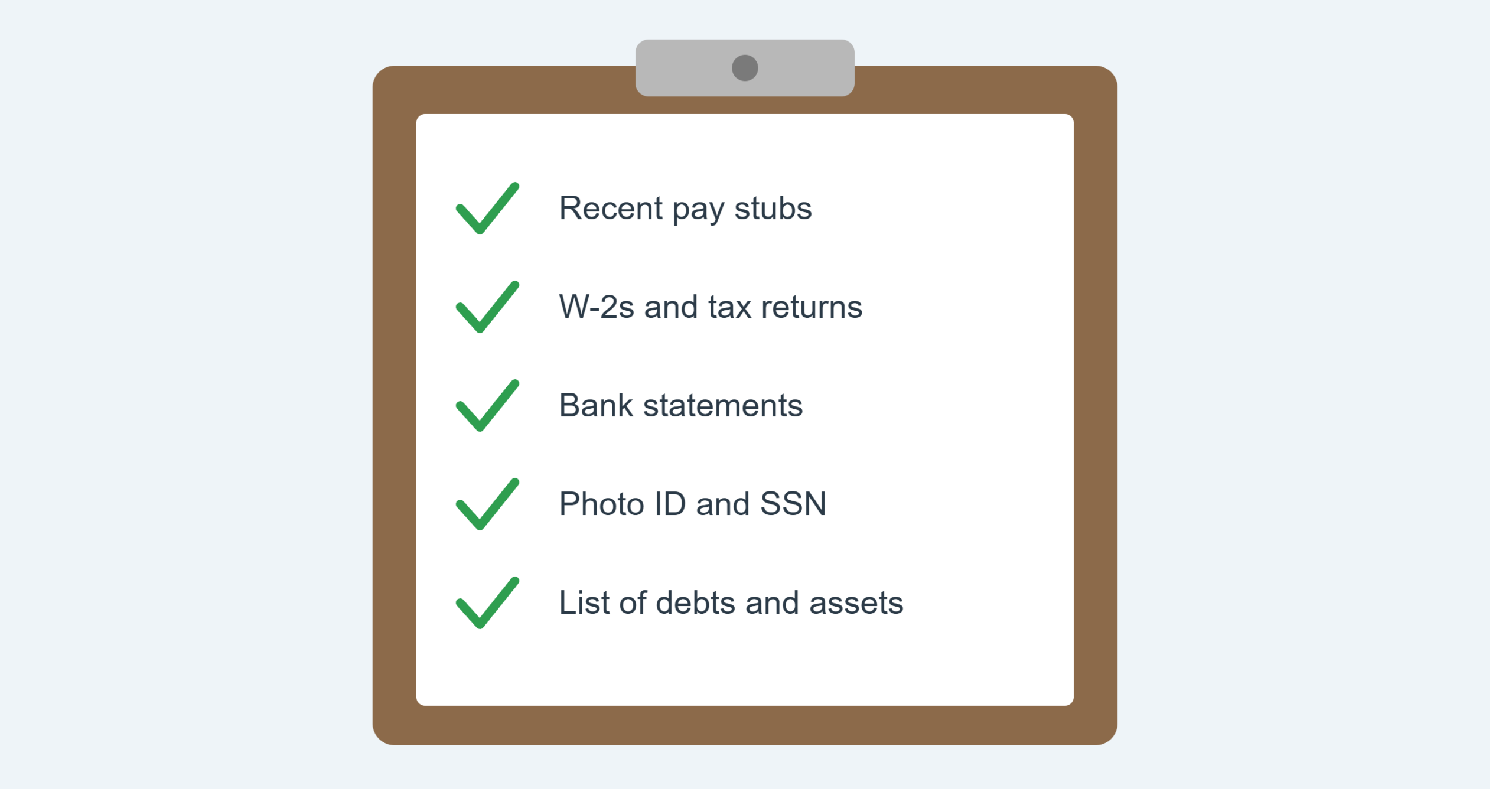
Depending on your circumstances, this may include recent pay stubs, W-2 forms, tax returns, bank statements, investment statements, identification, and documentation concerning other sources of income or assets.
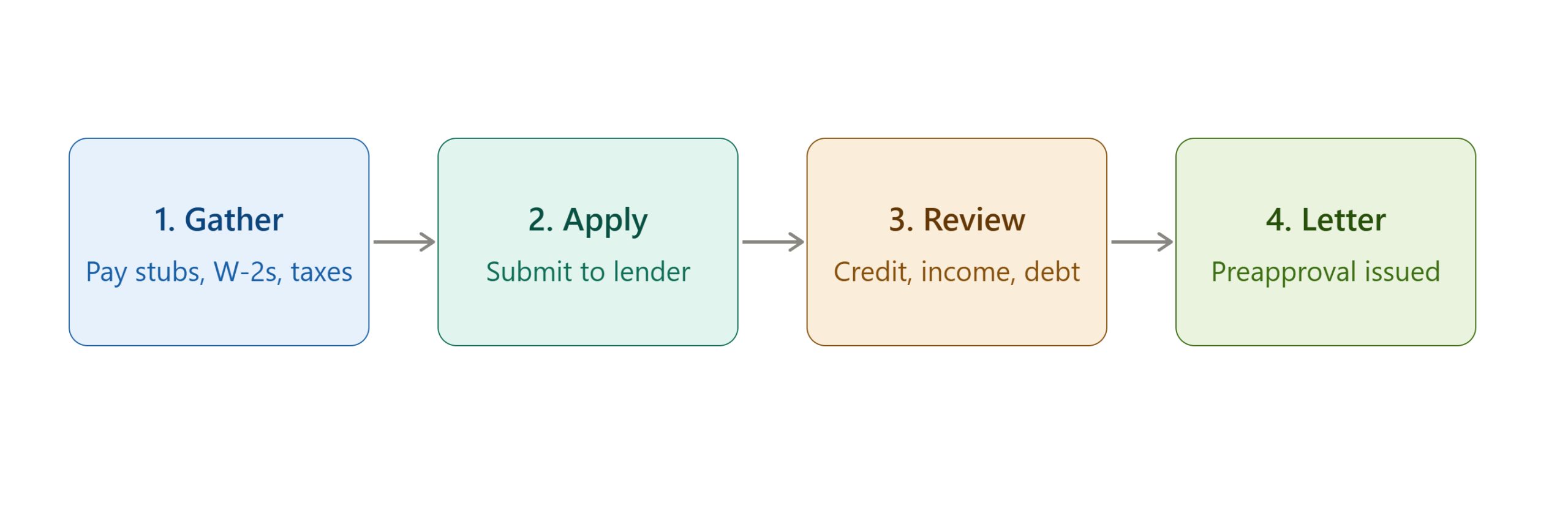
Fannie Mae’s consumer guidance lists recent pay stubs, W-2s, tax returns, asset statements, identification, employment information, and other documents among materials that may be requested during the mortgage process. Fannie Mae
Step 4: Contact Multiple Lenders
Don’t automatically choose the first lender you contact.
Consider comparing banks, credit unions, mortgage companies, and other qualified lenders.
Different lenders can offer different loan programs, pricing, fees, and service experiences.
Step 5: Submit Information for Preapproval
You’ll provide the lender with information about your finances and intended home purchase.
The lender may review your credit and evaluate your income, assets, debts, and other financial factors.
Step 6: Receive the Preapproval Letter
If the lender determines that you meet its preliminary requirements, it may issue a preapproval letter.
The letter typically indicates an approximate maximum loan amount and may include conditions or assumptions.
Step 7: Start Shopping for a Home
Once you’re preapproved, you can begin shopping with a clearer understanding of your potential financing.
However, remember that the preapproval amount should not automatically become your home-buying budget.
What Do Mortgage Lenders Look At?
Mortgage lenders evaluate several areas of a borrower’s financial profile.
Income
Lenders need to determine whether your income is sufficient and reliable enough to support the proposed mortgage payment.
Employment income is one common source, but qualifying income can come from other sources depending on the lender’s requirements and applicable loan rules.
Fannie Mae’s current underwriting guidance emphasizes reliable and recurring income as one factor in assessing mortgage applications. Fannie Mae Selling Guide
Employment
Your employment history and current employment status can be important during underwriting.
For borrowers whose income is used to qualify, lenders generally need to verify employment income. Fannie Mae’s 2026 guidance, for example, describes verification requirements involving pay stubs, W-2s, tax returns, employers, and approved verification systems. Fannie Mae Selling Guide
Credit History
Your credit history gives lenders information about how you’ve managed credit and debt.
Late payments, high balances, collections, bankruptcies, and other credit events can affect mortgage eligibility depending on the loan program and lender.
Existing Debts
Lenders consider recurring financial obligations when evaluating whether you can handle a new mortgage.
These may include:
- Credit card payments
- Auto loans
- Student loans
- Personal loans
- Existing mortgages
- Lease payments
- Child support
- Alimony
- Other recurring debts
Fannie Mae’s underwriting guidance specifically includes various recurring liabilities when assessing a borrower’s ability to meet mortgage obligations. Fannie Mae Selling Guide
Assets and Savings
Lenders may review your bank accounts, investment accounts, retirement accounts, and other eligible assets.
They may need to verify that you have enough funds for your down payment, closing costs, reserves, and other required expenses.
Down Payment
Your planned down payment affects the amount you need to borrow and may affect mortgage insurance requirements.
A larger down payment can reduce the mortgage balance, but buyers should avoid using all of their savings simply to increase the down payment.
Maintaining adequate cash reserves can be important after purchasing a home.
What Documents Are Needed for Mortgage Preapproval?
The exact documentation varies by lender and borrower.
Common documents can include:
Income Documents
- Recent pay stubs
- W-2 forms
- Federal tax returns when applicable
- 1099 forms
- Documentation of commission or bonus income
- Self-employment income documentation
- Business tax returns when applicable
Asset Documents
- Checking account statements
- Savings account statements
- Investment account statements
- Retirement account statements
- Certificates of deposit
- Documentation of other eligible assets
Identification
You may need government-issued identification and other personal information required by the lender.
Additional Documentation
Depending on your circumstances, the lender may request:
- Gift letters
- Divorce documents
- Bankruptcy documents
- Rental payment history
- Employment information
- Business documentation
- Documentation explaining unusual deposits
- Other supporting financial records
Fannie Mae’s consumer mortgage checklist notes that documentation requirements can vary depending on the borrower’s circumstances and loan process. Fannie Mae
How Long Does Mortgage Preapproval Take?
The timeframe varies considerably.
A straightforward application with organized documentation may move relatively quickly, while a more complicated financial profile can require additional review.
Factors that can affect the timeline include:
- Self-employment
- Multiple income sources
- Recent job changes
- Large deposits
- Investment income
- Rental properties
- Credit issues
- Bankruptcy history
- Complex assets
- Missing documents
Providing accurate and complete information can help reduce unnecessary delays.
How Long Is a Mortgage Preapproval Valid?
Preapproval letters are not permanent.
The CFPB notes that preapproval letters often have expiration periods, typically around 30 to 60 days, although practices vary by lender. Consumer Financial Protection Bureau
If your preapproval expires before you find a home, the lender may need to update your financial information and issue a new letter.
Because financial information can change, don’t assume an old preapproval automatically remains valid.
Does Mortgage Preapproval Affect Your Credit Score?
A mortgage preapproval can involve a credit inquiry, and the effect depends on the type of credit inquiry and your circumstances.
If you’re comparing mortgage lenders, don’t avoid shopping around simply because you’re concerned about multiple mortgage inquiries.
The CFPB states that when consumers obtain multiple preapprovals within a short period, there should generally not be a major impact on their credit score. Consumer Financial Protection Bureau
However, borrowers should still ask lenders how they handle credit inquiries.
Mortgage Preapproval vs. Prequalification
The terms preapproval and prequalification are sometimes used differently by different lenders.
Generally, prequalification can be a less extensive initial assessment based heavily on information provided by the borrower.
Preapproval usually involves a more detailed review.
However, there is no universal standard requiring every lender to use these terms in exactly the same way.
The CFPB specifically notes that lenders use “prequalification” and “preapproval” differently, so borrowers should ask the lender what its process actually involves. Consumer Financial Protection Bureau
Prequalification
Prequalification may involve:
- Basic income information
- Estimated debts
- Approximate credit information
- Preliminary affordability estimates
Preapproval
A more detailed preapproval may involve:
- Credit review
- Income verification
- Asset documentation
- Employment information
- Debt review
- More detailed financial analysis
The important question isn’t simply what the lender calls the process. Ask what information the lender actually verifies.
Is Mortgage Preapproval a Guarantee?
No.
A preapproval is not a guaranteed mortgage approval.
The CFPB explains that a preapproval letter is based on assumptions and is not a guaranteed loan offer. Consumer Financial Protection Bureau
After you make an offer on a home, the lender may need to conduct additional underwriting.
The property may also need to satisfy requirements related to value, condition, title, insurance, and the applicable loan program.
Your financial circumstances can also change.
For example, taking on significant new debt, changing employment, making unexplained large deposits, or experiencing a major change in income could affect the final mortgage approval.
Can You Get Preapproved Before Finding a House?
Yes.
In fact, getting preapproved before seriously shopping can be useful because it gives you a better understanding of your potential financing.
The CFPB recommends exploring mortgage choices before finding a home and notes that a preapproval letter can help demonstrate to sellers that you’re a serious buyer. Consumer Financial Protection Bureau
You don’t necessarily need to know the exact property before beginning the preapproval process.
How Much House Can You Afford After Preapproval?
This is one of the most important questions for homebuyers.
Your lender may tell you that you qualify for a particular mortgage amount.
That doesn’t mean you should spend the maximum.
Consider your complete monthly budget, including:
- Mortgage principal
- Mortgage interest
- Property taxes
- Homeowners insurance
- Mortgage insurance
- HOA fees
- Utilities
- Maintenance
- Repairs
- Transportation
- Childcare
- Food
- Retirement savings
- Emergency savings
- Other debt payments
The CFPB emphasizes that buyers—not lenders—must ultimately decide how much they can comfortably afford. Consumer Financial Protection Bureau
Should You Get Preapproved by More Than One Lender?
Getting multiple preapprovals can be useful.
Different lenders may provide different loan programs, rates, fees, and service levels.
The CFPB recommends shopping around and suggests getting at least three preapprovals when comparing lenders. Consumer Financial Protection Bureau
However, don’t compare preapproval letters solely by the maximum loan amount.
A lender offering a larger maximum loan isn’t necessarily offering the best mortgage.
What Should You Compare Between Lenders?
When evaluating lenders, consider:
Interest Rate
Compare the interest rates offered for the same type of mortgage.
APR
APR can provide additional information about borrowing costs beyond the stated interest rate.
Origination Charges
Check what the lender charges to originate the mortgage.
Points
Determine whether the quoted rate includes discount points.
Lender Credits
Some lenders may provide credits toward closing costs in exchange for other pricing terms.
Loan Type
Compare equivalent loan products.
A conventional 30-year fixed mortgage should generally be compared with another similar mortgage rather than a completely different loan structure.
Customer Service
Responsiveness can become extremely important when you’re under contract and approaching a closing deadline.
Does Preapproval Commit You to a Lender?
Generally, obtaining a preapproval does not mean you’re required to use that lender for your final mortgage.
The CFPB explains that a preapproval helps you shop for a home but does not commit you to that lender. Consumer Financial Protection Bureau
Once you have a specific property and are ready to move forward, you should compare official mortgage offers before selecting the final lender.
What Is a Loan Estimate?
A Loan Estimate is a standardized three-page disclosure that provides important information about a mortgage you’re applying for.
It includes information such as:
- Interest rate
- Monthly payment
- Loan amount
- Estimated closing costs
- Estimated taxes and insurance
- Certain loan features
- Rate information
The CFPB states that lenders generally must provide a Loan Estimate within three business days after receiving the required application information. Consumer Financial Protection Bureau
The Loan Estimate is extremely important because it allows you to compare actual mortgage offers.
Preapproval vs. Loan Estimate
These two documents serve different purposes.
A preapproval letter helps demonstrate that a lender is tentatively willing to lend you a certain amount.
A Loan Estimate provides standardized information about a specific mortgage application and its estimated costs.
Receiving a Loan Estimate does not mean your mortgage has been finally approved. Consumer Financial Protection Bureau
Once you’ve identified a property and are moving forward with a mortgage application, compare Loan Estimates from multiple lenders.
What Happens After You Make an Offer?
If your offer is accepted, the mortgage process generally becomes more detailed.
Your lender may:
- Verify your financial information
- Order or review an appraisal
- Review the property
- Verify employment and income
- Review assets and debts
- Complete underwriting
- Resolve outstanding conditions
- Prepare final loan documents
- Provide the Closing Disclosure
- Proceed toward closing
A preapproval helps establish a starting point, but the lender still has to complete the applicable underwriting and closing process.
What Can Cause a Mortgage to Be Denied After Preapproval?
A preapproval does not eliminate the possibility of denial.
Income Changes
A significant reduction or change in qualifying income can affect your application.
Employment Changes
Changing jobs or employment circumstances may require additional documentation or review.
New Debt
Taking out a car loan, opening credit cards, or significantly increasing balances can change your financial profile.
Credit Changes
New late payments or other negative credit events can create problems.
Unexplained Deposits
Large unexplained deposits may require documentation showing where the funds came from.
Property Problems
The property itself may create financing issues if it doesn’t meet applicable requirements or doesn’t support the expected loan amount.
Appraisal Issues
If the home’s appraised value is lower than expected, your financing structure may need to change.
Documentation Problems
Missing, inconsistent, or unverifiable financial information can delay or affect underwriting.
What Should You Avoid After Getting Preapproved?
Getting preapproved is an important milestone, but you should continue managing your finances carefully.
Avoid Taking on Major New Debt
Don’t finance a new vehicle or make large purchases unless you have discussed the implications with your lender.
Avoid Changing Jobs Without Understanding the Impact
Employment changes can require additional underwriting.
Avoid Unnecessary Credit Applications
Opening multiple new credit accounts can complicate your financial profile.
Avoid Large Unexplained Deposits
Keep records for significant deposits and be prepared to explain their source.
Keep Your Financial Documents Updated
Your lender may request updated information during underwriting.
Don’t Empty Your Savings
Homeownership involves expenses beyond the down payment.
Keeping sufficient reserves can help you manage unexpected costs after closing.
Mortgage Preapproval for First-Time Homebuyers
First-time buyers can particularly benefit from preapproval because the mortgage process can be unfamiliar.
Before looking at properties, first-time buyers should understand:
- Their approximate budget
- Available down payment
- Closing costs
- Estimated monthly payment
- Loan options
- Mortgage insurance
- Property taxes
- Homeowners insurance
- Emergency savings requirements
A preapproval can help turn an uncertain home search into a more structured process.
Mortgage Preapproval for Self-Employed Borrowers
Self-employed borrowers may need to provide additional financial documentation because their income can be more complicated to verify.
Depending on the circumstances, lenders may request:
- Personal tax returns
- Business tax returns
- Profit-and-loss statements
- Business bank statements
- 1099 forms
- Other business documentation
The exact requirements depend on the lender, loan program, and borrower.
Self-employed buyers should start gathering documents early rather than waiting until they’re under contract.
Mortgage Preapproval for Veterans
Eligible veterans and service members may consider VA financing when seeking a mortgage.
The preapproval process can still involve credit, income, assets, debts, and other financial information.
Borrowers should compare the complete terms of available loan options and understand the requirements associated with VA financing.
Mortgage Preapproval for FHA Buyers
FHA financing can be an option for eligible buyers who meet the program’s requirements.
If you’re considering an FHA mortgage, discuss the program’s down-payment, mortgage insurance, credit, property, and underwriting requirements with participating lenders.
Getting preapproved can help determine whether FHA financing fits your circumstances.
Mortgage Preapproval for USDA Buyers
Eligible buyers purchasing qualifying properties in eligible areas may consider USDA mortgage programs.
Income and property eligibility requirements apply.
A lender experienced with USDA financing can help determine whether the program is appropriate for your situation.
How to Improve Your Chances of Mortgage Preapproval
There are several steps prospective buyers can take before applying.
Review Your Credit Reports
Check for inaccurate information and address legitimate outstanding problems where possible.
Reduce High-Interest Debt
Lowering existing debt can improve your overall financial position.
Build Savings
Maintain funds for your down payment, closing costs, and emergency reserves.
Keep Your Income Stable
Avoid unnecessary employment changes immediately before applying if possible.
Organize Your Documents
Having financial records ready can make the application process smoother.
Avoid Major Financial Changes
Keep your financial profile stable during the mortgage process.
Common Mortgage Preapproval Mistakes
Mistake 1: Assuming Preapproval Equals Final Approval
It doesn’t.
A preapproval is an early assessment, not a guaranteed mortgage.
Mistake 2: Shopping at the Maximum Preapproved Amount
Your lender’s maximum isn’t necessarily your comfortable budget.
Mistake 3: Getting Only One Preapproval
Comparing multiple lenders can help you identify better options.
Mistake 4: Ignoring Closing Costs
Your down payment isn’t the only upfront expense.
Mistake 5: Choosing a Lender Solely Because of the Interest Rate
Fees, points, lender credits, loan terms, and service also matter.
Mistake 6: Making Large Purchases Before Closing
New debt can change your mortgage qualification.
Mistake 7: Not Reading the Loan Estimate
The Loan Estimate contains important information about the mortgage’s costs and terms.
Mortgage Preapproval Checklist
Before applying, consider preparing the following:
- Check your credit
- Review your monthly debts
- Calculate your available savings
- Determine your target down payment
- Gather recent pay stubs
- Gather W-2s
- Gather tax returns if applicable
- Gather bank statements
- Gather investment statements
- Prepare identification
- Document additional income
- Contact multiple lenders
- Request preapproval
- Compare lenders
- Ask about loan programs
- Ask about closing costs
- Understand your estimated monthly payment
- Avoid major financial changes during the process
Frequently Asked Questions About Mortgage Preapproval
Is mortgage preapproval necessary to buy a house?
Not in every transaction, but it can be extremely useful. Some sellers and agents may prefer or require buyers to demonstrate financing capability before accepting an offer.
How much does mortgage preapproval cost?
Many lenders do not charge a separate fee simply for providing a preapproval, but practices vary. Ask the lender whether there are any application, credit, or other fees.
Does preapproval guarantee my mortgage?
No. Preapproval is not a guaranteed loan offer. Final approval requires additional underwriting and verification. Consumer Financial Protection Bureau
How long does preapproval last?
Many preapproval letters are valid for approximately 30 to 60 days, although the exact period varies by lender. Consumer Financial Protection Bureau
Can I get preapproved before choosing a house?
Yes. Getting preapproved before house hunting can help you understand your potential financing and demonstrate that you’re a serious buyer.
Can I get preapproved by multiple lenders?
Yes. Comparing multiple lenders can help you find better mortgage options. The CFPB recommends shopping around and suggests obtaining at least three preapprovals. Consumer Financial Protection Bureau
What credit score do I need for mortgage preapproval?
There is no single credit score requirement for every U.S. mortgage. Requirements vary by lender, loan program, borrower circumstances, and other factors.
Does mortgage preapproval hurt your credit?
A lender may check your credit as part of the preapproval process. When multiple mortgage inquiries occur within a short period, they generally should not have a major impact on your credit score, according to CFPB guidance. Consumer Financial Protection Bureau
Is prequalification better than preapproval?
Neither term has exactly the same meaning across every lender. Ask what information the lender verifies and how its process works. Consumer Financial Protection Bureau
Can I change lenders after getting preapproved?
Yes. A preapproval generally doesn’t force you to use that lender for the final mortgage. You should compare official Loan Estimates before selecting your final lender. Consumer Financial Protection Bureau
Final Thoughts on Mortgage Preapproval
Mortgage preapproval is one of the most useful steps a U.S. homebuyer can take before entering the housing market.
It helps you understand your potential financing, provides sellers with evidence that you’re a serious buyer, and can reveal financial or documentation issues before you make an offer.
However, buyers should remember that preapproval is not final mortgage approval. Your lender may still need to verify your finances, evaluate the property, complete underwriting, and satisfy additional conditions before closing.
The smartest approach is to treat preapproval as the beginning of your mortgage strategy rather than the finish line.
Shop around with multiple lenders, compare the actual costs of different mortgage offers, keep your finances stable, maintain adequate savings, and choose a home based on what you can comfortably afford—not simply the maximum amount a lender is willing to finance.
Once you have a property and are ready to proceed, carefully compare your Loan Estimates. The CFPB recommends using standardized Loan Estimates from multiple lenders to compare mortgage costs and terms. Consumer Financial Protection Bureau
A well-prepared preapproval can put you in a stronger position to navigate the U.S. homebuying process with greater confidence and fewer surprises.

Seraphina Vale is a passionate content writer and blogger with 3 years of blogging experience, specializing in creating engaging, well-researched, and reader-focused articles. She enjoys breaking down complex topics into clear, practical insights that help readers stay informed and make confident decisions.