Replacing a roof is one of the largest home improvement expenses many American homeowners will face. Whether your roof has reached the end of its useful life, suffered storm damage, or simply needs an upgrade, understanding the expected cost before contacting roofing contractors can help you create a realistic budget and compare estimates more effectively.
In 2026, the cost of a new roof in the United States varies considerably depending on the roofing material, roof size, pitch, location, labor rates, accessibility, removal of the existing roof, and the condition of the underlying decking. Current cost guides put a typical U.S. roof replacement in a broad range of roughly $8,000 to $16,000, while more complex roofs and premium materials can push the total considerably higher. Asphalt shingles remain one of the most affordable and widely used options, while metal, tile, and slate roofing can cost substantially more. This Old House

For example, current 2026 data from This Old House estimates an average cost of about $10,042 for a 2,000-square-foot asphalt-shingle roof, while premium materials such as metal and clay tile can cost approximately $37,285 and $42,743 respectively for the same roof area. Other current sources produce somewhat different national averages, which demonstrates why homeowners should treat online prices as planning ranges rather than guaranteed quotes. This Old House
The good news is that you do not necessarily need the most expensive roofing material to get a durable, attractive, energy-efficient roof. For many homeowners, architectural asphalt shingles offer an excellent balance between upfront cost, appearance, durability, and installation availability. Metal roofing can make sense for homeowners prioritizing longevity, while tile and slate may appeal to those looking for premium aesthetics and extremely long service lives.
This guide explains how much a new roof costs in the USA in 2026, what you can expect to pay for different roofing materials and home sizes, what increases the price, and how to compare roofing estimates before signing a contract.
Average Cost of a New Roof in the USA in 2026
For a typical American home, a complete roof replacement commonly falls somewhere around $8,000 to $16,000, although the actual price can be lower or considerably higher depending on the project.
A current 2026 roofing cost guide places the national average around $12,000 to $15,000 for a standard architectural asphalt-shingle replacement, while other sources report typical asphalt replacement averages around $10,000–$12,000. Fixr
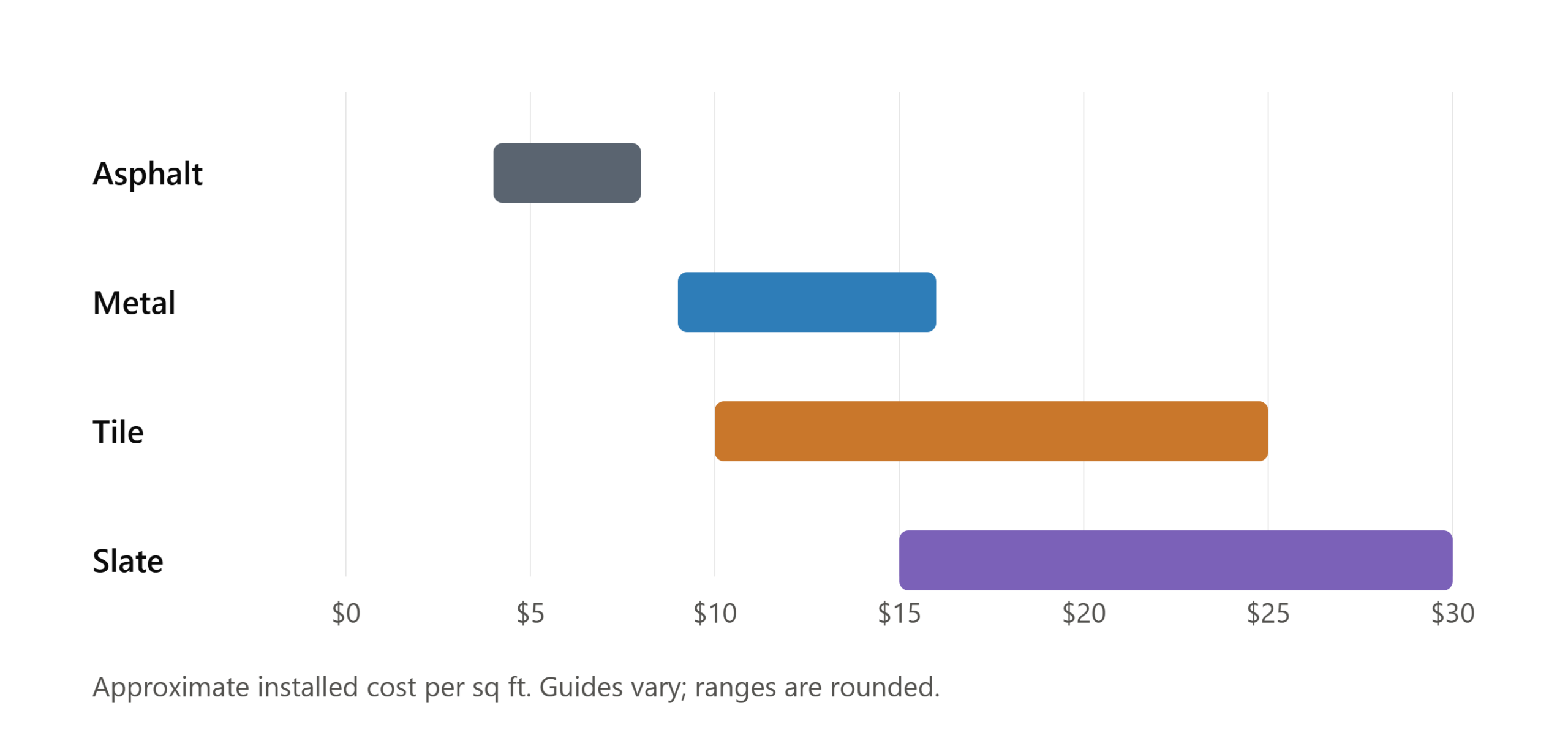
The variation comes from the fact that “new roof cost” does not describe one standardized project. A simple single-story home with a moderately pitched roof and one layer of asphalt shingles may be relatively inexpensive. A large two-story home with multiple roof sections, steep slopes, several layers of old roofing, damaged decking, and premium metal or slate could cost several times as much.
Typical 2026 Roof Replacement Costs
| Roofing Project | Approximate 2026 Cost |
|---|---|
| Small asphalt roof | $5,500–$9,000 |
| Standard asphalt roof | $8,000–$16,000 |
| Architectural shingles | $8,000–$17,000+ |
| Metal roofing | $14,000–$30,000+ |
| Tile roofing | $15,000–$40,000+ |
| Slate roofing | $25,000–$50,000+ |
| Premium/complex roof | $30,000–$60,000+ |
These are planning ranges rather than guaranteed contractor prices. Current published estimates differ because they use different assumptions about roof size, labor, materials, tear-off, pitch, and geographic location. This Old House
How Roofing Contractors Calculate the Cost
One of the most important things homeowners should understand is that roofers generally do not price a project simply according to the home’s interior square footage.
Roofing contractors commonly use a measurement called a roofing square.
One roofing square equals:
100 square feet of actual roof surface.
For example, a roof containing 20 roofing squares has approximately 2,000 square feet of roof surface.
Your roof surface can be significantly larger than your home’s floor area because of the roof’s pitch, overhangs, dormers, valleys, garages, and other architectural features.
This means a 2,000-square-foot home does not necessarily have a 2,000-square-foot roof.
New Roof Cost by Roofing Material
The roofing material you select is one of the biggest factors determining the final price.
Different materials also provide very different lifespans, appearances, maintenance requirements, and levels of weather resistance.
Asphalt Shingles
Asphalt shingles are the most common choice for American homeowners because they combine relatively low cost with straightforward installation and broad availability.
Current 2026 estimates put asphalt roof replacement costs broadly around $8,000 to $16,000 for many standard projects, although smaller or simpler roofs can cost less and large or complicated roofs can cost substantially more. Fixr
Basic three-tab shingles generally sit at the lower end of the price spectrum, while architectural or dimensional shingles cost more.
Architectural Shingles
Architectural shingles are thicker and generally provide a more dimensional appearance than basic three-tab shingles.
They are popular among homeowners who want an upgraded appearance without moving into significantly more expensive roofing materials.
Depending on the roof size, region, labor and product selected, an architectural asphalt roof can commonly fall within approximately $8,000–$17,000 or more.
Some 2026 estimates place architectural asphalt around $450–$750 per roofing square installed. CostSquared
Metal Roofing
Metal roofing has a significantly higher initial price than asphalt shingles, but it can offer a much longer service life.
Current 2026 estimates commonly place standing-seam metal roofing around $9–$16 per square foot installed, although premium systems and complex installations can cost more. CostSquared
For a typical home, that can result in a project costing approximately $14,000–$30,000 or more.
Metal roofing can last approximately 40–70 years depending on the material, installation and environment.
Clay and Concrete Tile
Tile roofing provides a distinctive appearance and can have an extremely long service life.
Current estimates put tile roofing well above standard asphalt pricing. Clay and concrete tile projects can easily reach $15,000–$40,000 or more, particularly on large or complicated roofs. United Renewals
One important consideration is weight. Some homes may require additional structural support before heavy tile roofing can be installed.
Slate Roofing
Natural slate is one of the most expensive residential roofing materials.
Depending on the quality of slate, installation complexity and region, current estimates can range from roughly $25,000 to $50,000+, with premium installations potentially reaching much higher figures. United Renewals
Slate can last for many decades and, when properly installed and maintained, can potentially last a century or more.
Roof Replacement Cost by Home Size
The following figures can help homeowners establish an initial budget.
| Home Size | Approximate Asphalt Roof Cost |
|---|---|
| 1,000 sq. ft. | $5,000–$8,000 |
| 1,500 sq. ft. | $7,000–$12,000 |
| 2,000 sq. ft. | $9,000–$16,000 |
| 2,500 sq. ft. | $11,000–$20,000 |
| 3,000 sq. ft. | $13,000–$24,000 |
These figures should be considered general planning estimates because the home’s floor area isn’t necessarily the same as the roof’s surface area. Roof pitch, overhangs and architectural design can significantly change the amount of roofing material required. This Old House
What Factors Affect the Cost of a New Roof?
Several factors can cause two homeowners with similarly sized houses to receive very different roofing quotes.
Roof Size
The larger the roof, the more materials and labor are required.
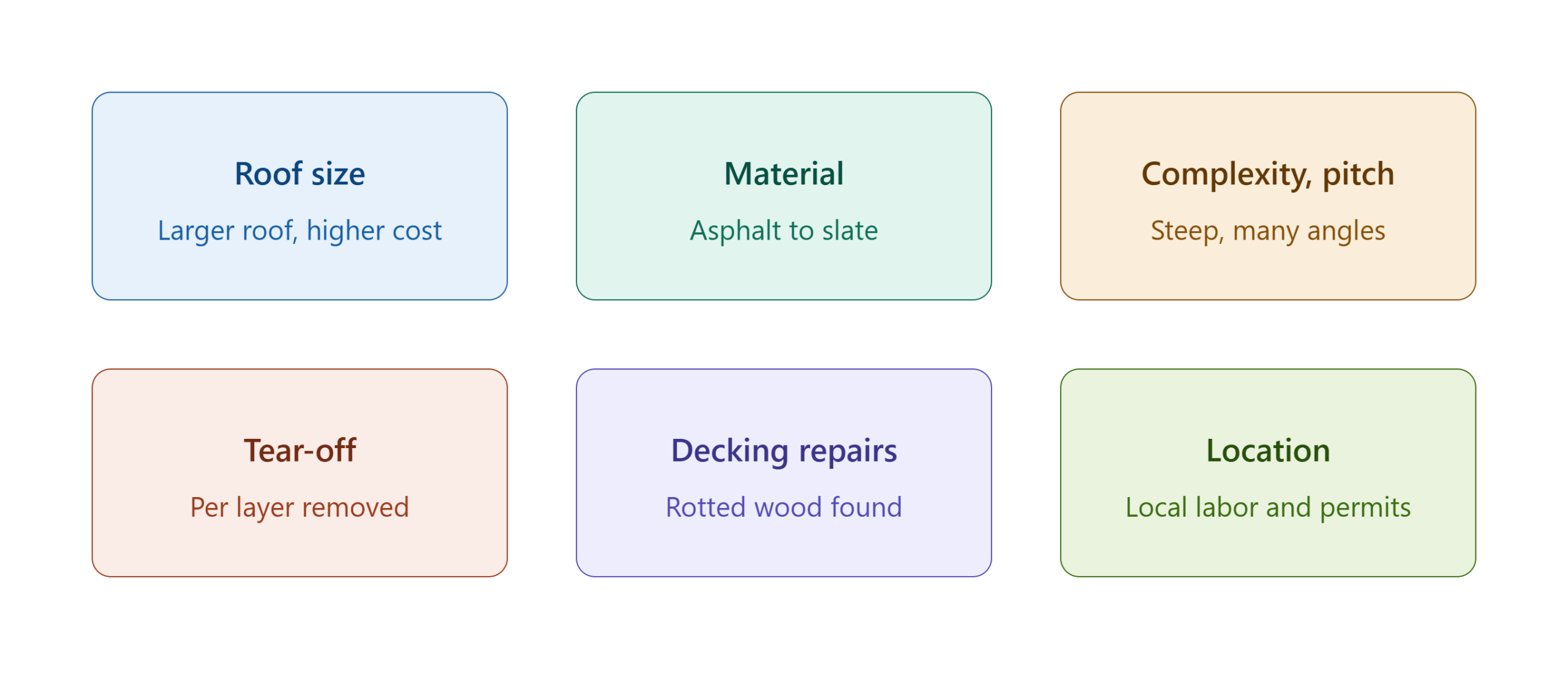
A 3,000-square-foot roof will naturally require considerably more shingles, underlayment, flashing and labor than a 1,200-square-foot roof.
Roof Pitch
Steep roofs are generally more expensive to replace.
Roofers may need additional safety equipment and more time to work on steep slopes. Steep roofs can also have a larger actual surface area compared with the building footprint.
Roofing Material
Material choice can dramatically change the total cost.
A standard asphalt roof may cost a fraction of what a premium slate or standing-seam metal roof costs.
Labor
Labor can represent a substantial portion of the total project.
One current 2026 source reports labor as the largest cost factor identified by surveyed homeowners, while regional wage differences and project complexity can significantly affect contractor pricing. This Old House
Roof Accessibility
A house with easy access and a simple roof design may be less expensive to work on than a property with difficult access, multiple stories or complicated architectural features.
Existing Roof Removal
Before installing a new roof, contractors may need to remove the existing roofing material.
Tear-off costs can increase when there are multiple existing layers or when old materials require additional labor to remove.
Roof Decking Damage
Removing old shingles sometimes reveals damaged or rotted decking underneath.
If the roof deck needs replacement, the project can become more expensive.
Flashing and Ventilation
Roof flashing around chimneys, skylights, vents and other penetrations may need replacement.
Roof ventilation may also need to be upgraded as part of the project.
Location
Roofing costs vary throughout the United States.
Labor rates, material transportation, building codes, permit fees, insurance requirements, weather conditions and local demand can all affect the final quote.
Additional Costs to Consider
The advertised roof replacement price may not include every expense.
Homeowners should ask contractors whether the quote includes:
- Old roof removal
- Disposal fees
- Roof decking repairs
- Underlayment
- Ice and water shield
- Drip edge
- Flashing
- Ridge vents
- Attic ventilation
- Chimney flashing
- Skylight flashing
- Gutters
- Permits
- Cleanup
- Manufacturer warranty
- Workmanship warranty
A quote that initially appears cheaper may not actually be the better deal if important components are excluded.
How Much Does Roof Removal Cost?
Roof removal is often part of a complete replacement project, but homeowners should confirm this with the contractor.
Removing old roofing requires labor, transportation and disposal.
The cost can increase if:
- There are multiple layers of roofing.
- The existing shingles are difficult to remove.
- The roof is steep.
- Access is difficult.
- Additional decking damage is discovered.
Ask whether tear-off and disposal are included in the quoted price before comparing contractors.
Roof Repair vs. Roof Replacement
Not every damaged roof needs to be completely replaced.
A relatively new roof with isolated damage may only require a repair.
For example, a contractor may be able to repair:
- A small leak
- A few missing shingles
- Damaged flashing
- A localized area of storm damage
- Minor gutter or ventilation problems
However, replacement may make more sense when the roof is approaching the end of its expected lifespan or has widespread deterioration.
Signs that replacement may be necessary include curling or missing shingles, repeated leaks, significant granule loss, sagging areas and visible deterioration. United Renewals
How Long Does a New Roof Last?
The lifespan depends heavily on the material.
Asphalt Shingles
Approximately 15–30 years, depending on the shingle type, installation quality and climate.
Metal Roofing
Approximately 40–70 years for many metal systems.
Tile Roofing
Often 50 years or more, with some systems lasting substantially longer.
Slate Roofing
Potentially 75–100+ years when properly installed and maintained.
Current 2026 cost data shows why homeowners should consider both upfront price and expected lifespan rather than choosing exclusively based on the initial quote. This Old House
Does Homeowners Insurance Pay for a New Roof?
Homeowners insurance may cover roof replacement when the damage results from a covered event, such as certain types of wind or hail damage.
However, insurance generally does not function as a maintenance plan for normal aging and deterioration.
Coverage depends on the specific policy, cause of damage, deductible, roof age and insurance company’s terms.
Before assuming your insurance will pay for a new roof, review your policy and speak with your insurance provider.
How to Save Money on a New Roof
Replacing a roof is expensive, but homeowners can take several steps to control costs.
Get Multiple Roofing Estimates
Try to obtain at least three detailed estimates from reputable roofing contractors.
Don’t automatically choose the lowest bid.
Instead, compare:
- Materials
- Roof squares
- Labor
- Tear-off
- Decking allowance
- Flashing
- Ventilation
- Warranties
- Cleanup
- Payment terms
Choose the Right Roofing Material
A premium material isn’t necessarily the best choice for every property.
For many homeowners, architectural asphalt shingles provide a good combination of affordability and durability.
Schedule Before an Emergency
If you already know your roof is approaching the end of its lifespan, planning ahead can give you more time to compare contractors and financing options.
Waiting until a major leak occurs can result in rushed decisions.
Ask About Manufacturer-Certified Installation
Some roofing manufacturers offer enhanced warranties when their products are installed by appropriately qualified or certified contractors.
Ask the roofer which warranties apply to your project and what conditions must be met.
Questions to Ask a Roofing Contractor
Before signing a roofing contract, ask:
How many roofing squares does my roof have?
This helps you understand how the contractor calculated the material requirements.
What roofing material and manufacturer are you recommending?
Don’t accept a quote that only says “shingles” without identifying the product.
Is tear-off included?
Make sure removal and disposal are clearly addressed.
What happens if damaged decking is discovered?
Ask how additional work will be priced.
Are permits included?
Permit requirements vary by location.
What warranties are included?
Separate manufacturer and workmanship warranties may apply.
How long will the project take?
Weather and material availability can affect scheduling.
Is your company properly licensed and insured?
Verify credentials where applicable before hiring.
Is a New Roof a Good Investment?
A new roof can provide more than protection from rain and snow.
It can improve curb appeal, reduce the risk of water damage and make a home more attractive to potential buyers.
The financial return varies by material and market. Current cost research indicates that asphalt roofing can provide a particularly strong resale return compared with other roofing materials, although actual results depend on local real-estate conditions and the specific project. CostSquared
Homeowners should therefore consider a roof replacement as both a necessary building-maintenance expense and a potential long-term investment in the property.
Final Thoughts
So, how much does a new roof cost in the USA in 2026?
For many homeowners, a reasonable starting budget for a standard asphalt-shingle roof is approximately $8,000 to $16,000, with a typical project often landing around the low five figures. However, there is no universal price because every roof is different.
A larger roof, steep pitch, difficult access, extensive decking damage or premium material can push the price substantially higher. Metal, tile and slate roofing can cost tens of thousands of dollars but may provide considerably longer service lives than standard asphalt shingles. This Old House
The best way to determine your actual cost is to have several qualified roofing contractors inspect the property and provide detailed written estimates. Compare the roof size, material specifications, tear-off, decking allowance, ventilation, warranties and labor rather than simply choosing the contractor with the lowest total.
For homeowners planning a roof replacement in 2026, understanding these factors before requesting quotes can make it much easier to set a realistic budget and avoid unexpected expenses.
Frequently Asked Questions
What is the average cost of a new roof in the USA in 2026?
A typical roof replacement is commonly around $8,000–$16,000, although costs vary significantly by material, roof size, location and complexity. Fixr
How much does a 2,000-square-foot roof cost?
A 2,000-square-foot asphalt roof can commonly cost around $9,000–$16,000, although actual quotes can fall outside this range. Current 2026 estimates from This Old House put a 2,000-square-foot asphalt roof at approximately $10,042. This Old House
Is metal roofing more expensive than asphalt?
Yes. Metal roofing generally has a substantially higher upfront cost than asphalt shingles, but it can last approximately 40–70 years, compared with a shorter lifespan for many asphalt systems. This Old House
What is the cheapest roofing material?
Asphalt shingles are generally among the least expensive mainstream residential roofing options in the United States.
Should I repair or replace my roof?
If the damage is isolated and the roof is relatively young, repair may be appropriate. If the roof has widespread deterioration, repeated leaks or is approaching the end of its expected lifespan, replacement may be more economical.
How can I get an accurate roof replacement estimate?
Contact several reputable local roofing contractors and request detailed written estimates based on an actual roof inspection. Compare the scope of work, materials, labor, warranties and additional charges—not just the final price.

Seraphina Vale is a passionate content writer and blogger with 3 years of blogging experience, specializing in creating engaging, well-researched, and reader-focused articles. She enjoys breaking down complex topics into clear, practical insights that help readers stay informed and make confident decisions.